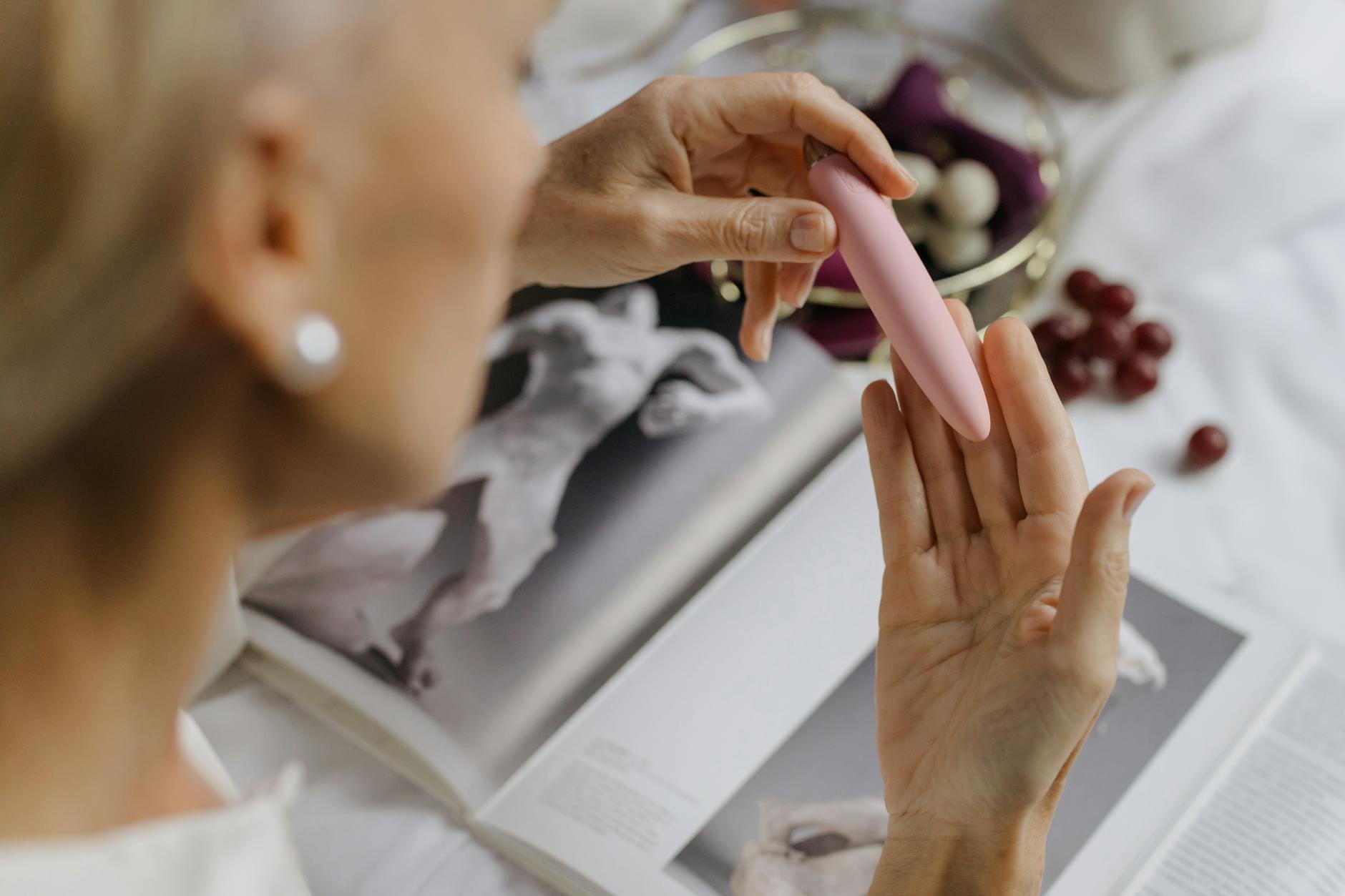
The thing no one tells you about infidelity and pleasure
Here's the part that catches people off guard: infidelity doesn't just wound the relationship. It wounds your relationship with yourself. You might feel angry at your partner, sure. But you also feel angry at your body for the sensations it once received from someone who betrayed you. That's a specific kind of complicated.
Most conversations about healing after infidelity focus on rebuilding trust with a partner. But before you can do that, you need to rebuild trust with your own body. And that's harder work, because it requires you to separate pleasure from betrayal.
Why your pleasure feels tangled right now
When infidelity happens, your body becomes a complicated archive. Every sensation your partner once gave you now carries the weight of their betrayal. Touch that felt good becomes a reminder of what you didn't see coming. That's not weakness, not oversensitivity. That's your nervous system doing exactly what it's supposed to do: protecting you.
Many people I work with describe this as a kind of numbness. Not a physical absence of sensation, but an emotional distance from it. You might be able to orgasm, but it feels hollow. Or you might find that arousal simply doesn't arrive the way it used to. Your body is keeping score, and right now, the score reads: not safe.
The cultural narrative says you should move on, get back in the saddle, prove the infidelity didn't damage you. That's rubbish. Moving through this requires patience, not speed.
Why solo pleasure matters more now than ever
Partner sex after infidelity comes loaded with anxiety. You're watching for signs of arousal, monitoring your own reactions, hypervigilant about whether you're "normal" or "damaged." That vigilance kills pleasure. It's impossible to be turned on while simultaneously auditing your own responses.
Solo pleasure, by contrast, is the only space where you don't have to perform recovery. You're not trying to prove anything to anyone. You're not working through intimacy issues. You're just exploring sensation on your own timeline, with your own rules.
This is why lemon vibrators and other clitoral vibrators become such powerful tools during this phase. They're not about reaching orgasm or achieving some benchmark of "normal." They're about rebuilding the conversation between your brain and your body. They're about saying to yourself: my pleasure belongs to me. This sensation is mine.
How lemon vibrators help the nervous system reset
Clitoral vibrators work through patterns of stimulation that bypass some of the vigilance your nervous system has built up. A lemon vibrator, specifically, uses gentle suction patterns rather than intense vibration. That matters when your body has learned to brace.
When you've been betrayed, your pelvic floor tightens. Your clitoris becomes less responsive to direct touch because your nervous system is essentially holding its breath. A lemon clitoral vibrator's suction approach is gentler, less demanding. It doesn't require the same kind of relaxation that a traditional vibrator does. You can use it while partially defended, and gradually, your body learns it's safe to open up again.
I recommend starting with the lowest setting, just to learn how your body responds without pressure to perform. This isn't about chasing an orgasm. It's about noticing sensation. It's about your nervous system collecting evidence that pleasure can exist separately from betrayal.
The timeline is not linear
Some days solo pleasure will feel grounding. Other days it will feel complicated, even triggering. That's normal and expected. Healing isn't a straight line. You might have weeks where using a lemon vibrator feels restorative, and then a week where you can't go there at all. That's not failure. That's your nervous system asking for rest.
The key is removing the goal. If you approach solo pleasure as another performance metric, another thing you're supposed to be "doing right," you've recreated the same dynamic that made partner sex feel unsafe. The only goal here is curiosity. Does this feel okay today? What does my body want? Those are the only questions.
When to consider partnered pleasure again
There's no universal timeline, but I've noticed a pattern in my work: people usually feel ready when they can experience arousal alone without it immediately triggering memory of the infidelity. That might take months. It might take longer. Rushing it doesn't help anyone.
When you do decide to reconnect sexually with a partner, whether that's the person who betrayed you or someone new, communication becomes non-negotiable. Specifically, you need to tell them what your body might need. Longer warm-up time. Different kinds of touch. Permission to pause or stop. These aren't demands. They're information that helps rebuild safety.
If you're working on reconnecting with the partner who was unfaithful, I'd strongly recommend couples therapy alongside individual healing. The sexual piece is only one part of the bigger trust work.
Making solo pleasure feel less isolating
There's a loneliness to this phase that catches people off guard. While your partner is navigating their own guilt or defensiveness, you're alone with a vibrator, trying to rebuild your relationship with pleasure. It can feel like isolation.
It's not. It's actually the opposite. You're doing the work that makes real connection possible. You're separating what your body needs from what you thought you wanted from a relationship. That's foundational.
You might also find that exploring pleasure solo gives you language for what comes next. A lemon vibrator, or any clitoral vibrator, teaches you exactly what sensation works for your body. That information is gold when you eventually return to partner sex. You know what you need. You can ask for it specifically.
The permission you need
Let me be direct: your pleasure after infidelity is not a betrayal of the relationship healing process. It's part of it. Reclaiming your body as a source of joy and sensation is an act of self-protection and self-love. It says: what happened to me doesn't get to define what's possible for me going forward.
A lemon vibrator is just a tool. But it's a tool that says: my pleasure matters. My body matters. My own sensations belong to me. And in the wake of infidelity, when everything feels compromised, that's a radical act.
FAQ: Healing pleasure after betrayal
How long does it usually take to feel ready for solo pleasure again after infidelity?
There's no standard timeline. Some people feel ready within weeks. Others need months or longer. The key is not forcing it based on what you think you "should" be doing. Your nervous system will let you know when it's ready to explore. If you're noticing consistent numbness or complete inability to feel arousal, that's worth discussing with a therapist who specializes in trauma or sexual health.
Can using a vibrator after infidelity feel like I'm accepting what happened?
Not at all. In fact, reclaiming your own pleasure is the opposite of accepting infidelity. It's refusing to let betrayal define your sexuality. Using a lemon vibrator or other clitoral vibrator is an act of ownership. It's saying my body, my pleasure, my rules.
Should I tell my partner I'm using a vibrator for solo pleasure after infidelity?
That depends on the status of your relationship and how much trust has been rebuilt. If you're working on reconnection, transparency can help. But your solo pleasure is fundamentally yours. You don't owe detailed reports. You might say something like: I'm exploring solo pleasure to help my body feel safe again. That's enough.
What if using a vibrator brings up emotions about the infidelity?
That's actually common and expected. Your body might release feelings during or after solo pleasure. That's okay. Let yourself feel it without judgment. If it becomes overwhelming, pause and return to it another time. There's no rush.
Is it normal to feel guilty about pleasure after infidelity when the relationship is still ongoing?
Completely normal. You might feel guilty because pleasure feels like moving on without processing the full impact of what happened. Or you might worry that enjoying yourself feels like a betrayal of the hurt you're supposed to be sitting with. Pleasure and grief can exist simultaneously. You can hold both.
How do I know if I'm ready to have sex with my partner again?
You're ready when you can think about physical intimacy without your nervous system immediately going into protection mode. You might still feel some anxiety, but there's also genuine desire alongside it. You feel mostly safe, even if not 100 percent. And you've had clear conversations about what you both need. If any of those pieces are missing, more time is usually the right call.
Honestly though, if you're still navigating infidelity and considering whether to reconnect, a therapist is worth the investment. The sexual piece is just one dimension of much bigger trust work.
The work you're doing matters
Reclaiming pleasure after infidelity is unglamorous work. It's not the kind of healing that looks good on Instagram. It's you, alone, with a lemon vibrator, slowly teaching your nervous system that sensation doesn't have to mean danger. It's quiet, repetitive, and necessary.
Your pleasure is yours. Not a gift from a partner. Not a performance. Not a metric of whether you're healing correctly. Just yours. And rebuilding that ownership, one sensation at a time, is some of the most important work you can do.
If you're working through infidelity and need structured guidance on rebuilding trust and intimacy, reaching out for professional support can make the process less isolating and more grounded.
Sources
Aronson, J. D. (2020). Infidelity: Why couples survive and thrive after betrayal. Guilford Press.
Gottman, J. M., & Silver, N. (2015). The seven principles for making marriage work. Harmony.
Kaestle, C. E., & Halpern, C. T. (2005). Sexual intercourse precedes partner violence in adolescent romantic relationships. Journal of Adolescent Health, 36(5), 386-392.
Van der Kolk, B. (2014). The body keeps the score: Brain, mind, and body in the healing of trauma. Viking.