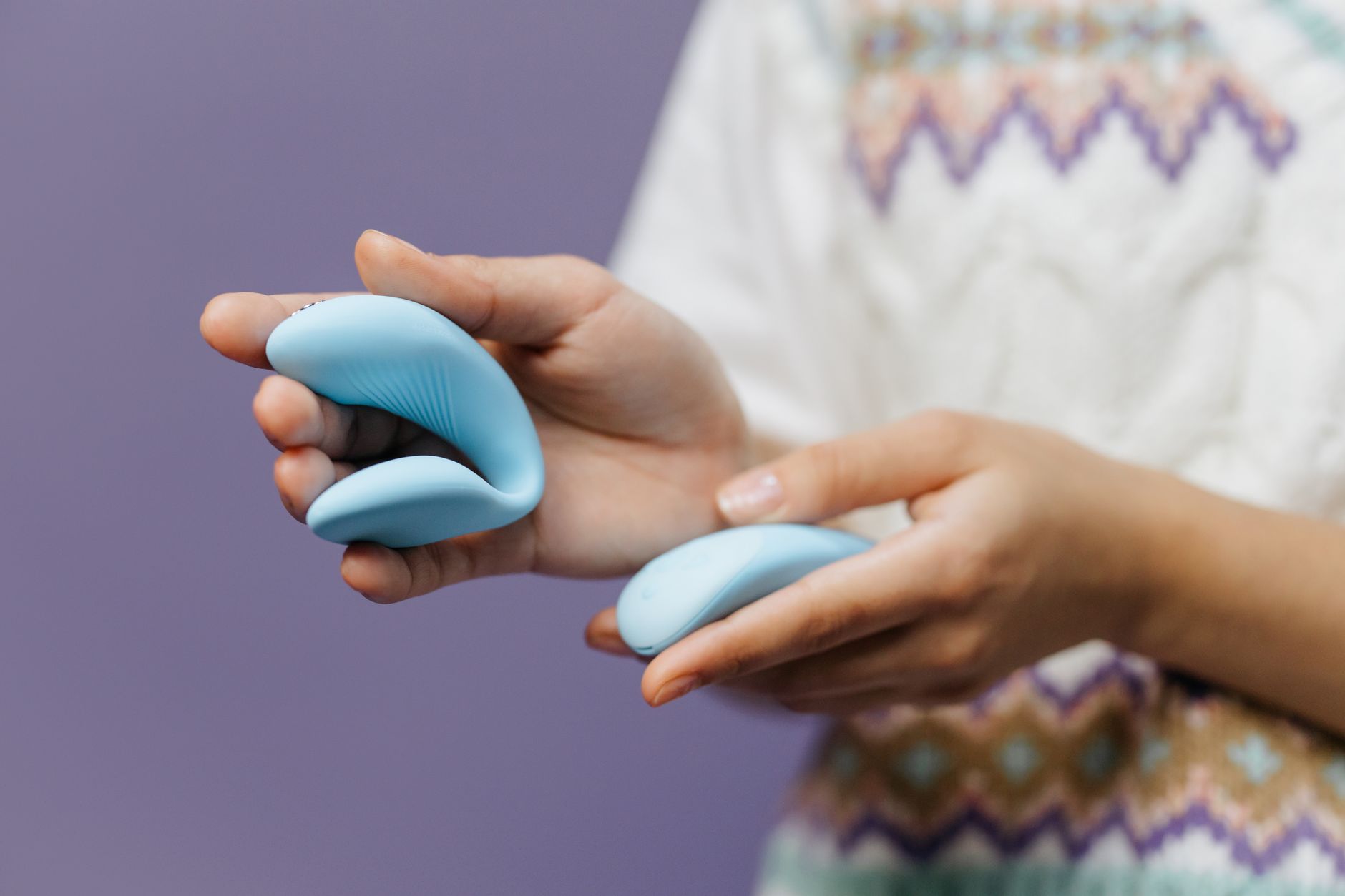
Let's be real about the silence
You've thought about it. Maybe you've even researched lemon vibrators or clitoral vibrators late at night, alone on your phone, telling yourself it's just curiosity. And then the thought hits: "How do I even bring this up?" The silence that follows is so loud you almost talk yourself out of the whole thing.
Here's what I've learned from two decades of working with couples: the shame around wanting pleasure isn't really about the toy. It's about vulnerability. It's about saying "I want this. I deserve this. And I need your help to feel safe asking." That's terrifying. And it's also the conversation that, once you have it, changes everything about how you relate to your partner.
The good news? You don't need to be fearless to start. You just need to be honest.
Why the conversation feels so hard
Three things usually block us from talking about toys with a partner.
First, we inherit shame from everywhere. Sex toys were taboo for decades. Even now, they're coded as a sign that something is "missing" in the relationship. Women especially internalize the message that wanting a vibrator means their partner isn't enough. Men often hear that suggesting toys means they're inadequate. None of that is true. A lemon clitoral vibrator isn't a replacement for your partner. It's a tool. Like headphones aren't an insult to the person you're talking with; they're just the right medium for the experience you want.
Second, we're afraid of rejection. You imagine your partner pulling back, looking hurt, asking "Am I not enough?" or worse, laughing. That fear is legitimate. It's also very often not what happens. What actually happens, most of the time, is that your partner says "Oh thank god, I've wanted to talk about this too." But we don't know that until we speak.
Third, we don't know the actual words. You can't Google "how to ask my partner about lemon vibrators" without ending up in a forum where people are fighting about whether wanting toys means your marriage is broken. You need a script, not a debate.
Let's fix that.
The setup: timing and frame
Don't ambush this conversation in the middle of sex. Don't bring it up when you're already frustrated with your partner or the relationship. And for god's sake, don't do it via text.
Instead, choose a moment that's calm, private, and not loaded with other tension. Sunday morning coffee. A car ride with no kids. Literally any time you can say: "I want to talk about something with you. It's not bad. I just want us to be on the same page."
That frame does two things. It promises no judgment is coming their way, and it signals that this matters to you. Both are true.
The actual opening lines
Here are four ways to start, depending on your dynamic:
Option 1 (Direct and warm). "I've been thinking about what would make me feel better physically, and I want to talk to you about it because your feelings matter to me."
Option 2 (Vulnerable). "This is a little embarrassing to say, but I've been curious about something and I didn't know how to bring it up. I'm telling you because I trust you."
Option 3 (Collaborative). "I read something about ways couples can explore pleasure together. Some of it really appealed to me. Can I tell you about it?"
Option 4 (Problem-solution). "I notice my body needs more direct sensation to feel as much as I want to. I think a lemon clitoral vibrator might help. What do you think?"
Notice what all four have in common: they're honest, they include your partner, and they don't apologize for having desires. That's the recipe.
What to say next (the actual meat)
Once you've opened the door, give context. Not because you need to justify yourself, but because your partner can't read your mind.
Try something like: "It's not about you. It's about me understanding my own body better. And honestly, I think it could be fun for both of us. I've been reading about lemon vibrators and how they work differently than other toys. I think I'd like to try one."
If they ask why, don't fall into the trap of listing everything that's "wrong." Instead, say: "Because I want to feel more pleasure. Because my body responds to this kind of sensation. Because you matter to me and I want to be able to be more present with you."
That last one is key. The truth is, when you're fighting to reach an orgasm or trying to feel sensation that isn't there, you're mentally exhausted. You're not present. You're working. A vibrator doesn't replace presence. It creates it.
The conversation you might have
Your partner might say: "I feel like I'm not enough."
Response: "I know that's scary to hear. And I get why you'd think that. But a toy doesn't replace you. It helps my body work with me instead of against me. And when I feel better, we both feel better. That benefits us."
Your partner might say: "This is kind of weird to me."
Response: "I know. It was weird to me too until I realized it was just about knowing myself better. I'm not asking you to do anything you're uncomfortable with. I just wanted you to know what I'm exploring."
Your partner might say: "Let's try it."
Response: "Really? I'm so glad. And we can go slow. This is about what feels good for me, and I want you to be comfortable too."
The last one is the dream, obviously. But even if the conversation lands differently, at least it's happening. You're not hidden. You're not ashamed. You're asking for what you need.
If they're still resistant
Sometimes, despite your best effort, a partner digs in. They say they don't want toys in the bedroom. They make it weird.
In that moment, you get to make a choice. You can say: "I understand this is new for you. I'd like for us to sit with it for a while. Maybe read something together. Maybe talk to a therapist together. Because this matters to me, and I think our relationship is worth figuring this out."
Or you can say: "I hear you. And I'm going to explore this on my own time. I'm not asking permission. I'm asking for your understanding."
Both are valid. You get to decide what your boundary is. Some people need a partner on board. Others just need a partner not actively opposing them. Know which one you are.
The follow-up that matters most
Once you've had the conversation, do something with it. Don't just drop the bomb and disappear into silence.
If your partner agreed, go research together. Look at clitoral vibrators that appeal to you. Read reviews. Let them see that you're thoughtful about this, not impulsive. A lemon vibrator like the Lem works with suction instead of pure vibration, which feels completely different than other toys. That's useful information for both of you.
If your partner resisted, circle back in a week. Not to argue, but to check in. "I've been thinking about what you said. How are you feeling now?" Sometimes people need time to process.
And if it's still a no, then you're at a decision point about whether this is a dealbreaker for you. That's information. Use it.
Why this conversation is actually a gift
I've worked with couples for decades. The ones who survive long-term aren't the ones who never fight. They're the ones who can talk about hard things. About money. About family. About sex.
When you tell your partner you want pleasure, you're teaching them that you're a full person with needs. You're teaching them that vulnerability is safe. You're teaching them that honesty makes you closer, not farther apart.
That's not just good for your sex life. That's good for everything.
So yes, have the conversation. Start awkwardly. Mess up the words. Get nervous. Do it anyway. The other side of that discomfort is the person you actually want to be with.
Frequently asked questions
Should I ask my partner's permission before buying a toy?
No. Your body is yours. That said, if you want them involved, asking them to choose with you is different than asking permission. One is collaborative. One treats you like a child. The distinction matters.
What if my partner wants to be involved but I want to use it alone?
That's completely fine and worth saying upfront. You can say: "I want to explore this on my own first, to understand what feels good for me. And maybe eventually we can incorporate it together. But for now, I need some solo time with this." That's a reasonable boundary.
How do I bring it up if we haven't had good communication about sex in general?
Start smaller. Instead of jumping to toys, try: "I'd like us to talk about what feels good for me sexually. Can we do that?" Let that conversation build. The toy conversation is easier once you've practiced vulnerability about pleasure at all. You might also consider working with a therapist who specializes in couples intimacy. That takes the pressure off you to be perfect at this.
What if my partner suggests toys and I'm the one who's shy?
Take a breath. Say thank you. Ask questions. "What made you think of this?" "What are you imagining?" "What do you want this to feel like?" You don't have to jump in immediately. You can say: "I need to sit with this for a minute. Can we talk about it more tomorrow?" Honest pace-setting is way better than agreeing just to end the conversation.
Is it normal to feel ashamed even after I've decided I want a vibrator?
Completely normal. Shame is deeply embedded. Having a vibrator, or wanting one, doesn't instantly erase messages you've been getting your whole life. That's okay. You can feel ashamed and do it anyway. In fact, that's kind of the whole point. You're choosing your pleasure over the shame. That takes real courage.
How specific should I be about what I want?
As specific as you're comfortable being. You don't have to lead with "I want a lemon clitoral vibrator that uses suction." You can start with "I've been reading about different kinds of vibrators" and let the conversation evolve. But eventually, yes, specificity helps. It shows you've done your thinking. It shows this isn't a whim.
One more thing
When you have this conversation, you're not just talking about a toy. You're saying: "I deserve pleasure. I deserve to know my own body. I deserve to ask for what I need. And I want to do this with you."
That's brave. So go be brave. Your future self will thank you for it.