Here's the thing nobody mentions
You don't have a pleasure problem. You have a performance problem.
Performance anxiety around sex operates exactly like stage fright. Your body tenses up. Your nervous system stays activated. You're watching yourself from outside your body instead of actually inhabiting it. And the harder you try to feel something, the less you feel anything at all.
This happens to smart, capable people constantly. It's not a personal failing. It's a redirect of your attention away from sensation and toward judgment. And it's completely fixable.
Why anxiety kills arousal (the neuroscience part)
When you're anxious, your sympathetic nervous system takes the wheel. That's your fight-or-flight response. It's useful if you're being chased. It's useless if you're trying to have an orgasm.
Arousal requires your parasympathetic nervous system. That's rest-and-digest. You cannot be in both states simultaneously. Your brain will not allow it. So if you're monitoring your own response, worrying about whether you're doing this right, wondering if your partner thinks you're taking too long—your sympathetic system stays activated, and arousal stays offline.
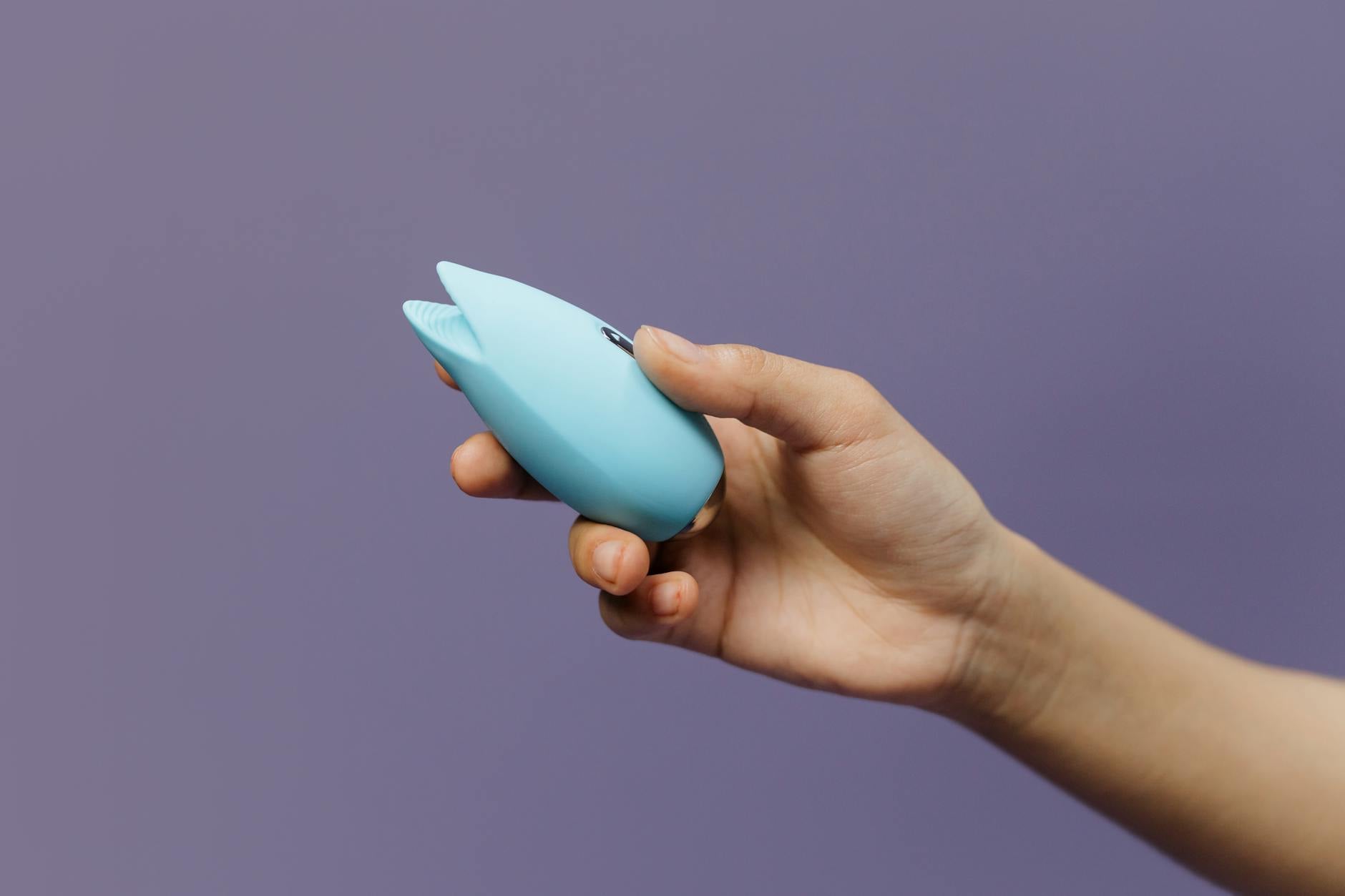
Add lemon sexual toys into that equation and you've introduced something that actually shifts the dynamic. But only if you use them in a specific way.
The anxiety loop, broken down
Three things typically happen when someone is using a lemon vibrator while anxious.
First, they're thinking about the vibrator itself. Is it working? Am I using it wrong? Should I be feeling more? This keeps them in their head.
Second, they're performing for someone—a partner, an imagined observer, or even just their own internalized critic. There's a "should" somewhere in the room, and it's drowning out the actual sensation.
Third, they're waiting for a specific outcome: an orgasm, a particular type of orgasm, orgasm on a timer. The goal becomes the thing they're chasing instead of the pleasure being the thing they're moving toward.
A lemon clitoral vibrator can interrupt all three loops, but only if you reframe what you're actually doing when you use it.
The reset: using your lemon vibrator for grounding, not performance
Instead of thinking of your lemon vibrator as a tool for reaching an outcome, think of it as a tool for returning to sensation. Here's how.
Start with your nervous system, not your genitals. Spend five minutes in a position where you feel genuinely safe and comfortable. That might be lying down with multiple pillows. That might be sitting up against a wall. It might even be sitting upright. The position matters because tension lives in the body, and you need a shape that your body trusts.
Then spend another five minutes just breathing. Boring, yes. Necessary, absolutely. You need to activate your parasympathetic system before anything else happens. Slow exhales help. So does noticing five things you can actually see, four you can touch, three you can hear, two you can smell, one you can taste. That's a grounding technique that works because it pulls you out of your head and into your actual environment.
Only after you've shifted your nervous system should you introduce the lemon vibrator.
Using a lemon sucker without the performance frame
When you pick up your lemon vibrator, the instruction is not to chase sensation. It's to notice what happens without judgment.
Start at the lowest setting. If you have the Lem, that's pattern one. Place it directly on your clitoris for about three seconds. Then move it away. Notice what your body does when the stimulation stops. Does it want more? Does it want less? Does it want something different?
This sounds strange because we're taught that vibrators are meant to be held in place and turned up until something happens. That's the performance frame. This is different. You're asking your body questions instead of demanding answers.
Spend ten to fifteen minutes just asking and noticing. You might not have an orgasm. You might have something that feels like arousal but doesn't land anywhere. You might have relief that the pressure to perform something has lifted. All of that is correct information.
The point is to remember what sensation actually feels like without the filter of expectation.
If you're using a lemon vibrator with a partner
Anxiety often doubles when someone else is in the room. Here's what helps.
Before you introduce the vibrator, have a conversation about what you're actually trying to do. You're not trying to prove anything. You're not trying to give someone a show. You're trying to reconnect with sensation in a low-pressure way. That conversation shifts the entire dynamic from performance to curiosity.
Then, depending on what you're comfortable with, either use the vibrator alone while they're present but not watching, or use it together in a way where the vibrator is about exploring together rather than creating a specific outcome.
Many people find that using a lemon clitoral vibrator while a partner provides other touch—hands, lips, just presence—helps because it distributes the stimulation across your body instead of concentrating all the attention on one outcome.
What matters is that both people understand the goal is sensation, not performance. That shift alone changes everything.
Managing the voice in your head
Even with all of this, you might notice a running commentary. That's normal. Anxiety lives as a narrator. Your job isn't to silence it. That usually makes it louder.
Instead, notice it the way you'd notice a song playing in the background of a café. Acknowledge it. Let it continue. And gently redirect your attention back to actual sensation—the feeling of the lemon vibrator, the texture of your skin, the temperature of the room.
This is what therapists call the "observing self." You're not pushing the anxiety away. You're just making room for it while you pay attention to something else.
When anxiety about pleasure is bigger than the vibrator can solve
If you find yourself stuck—if pleasure has been off-limits for months or years, if there's trauma in the background, if anxiety is pervasive across your entire life—a lemon vibrator is a helpful tool, but you might also need to talk to someone. A therapist who specializes in sexual health or anxiety can help you understand where the block is coming from and work with it at a deeper level.
That's not a failure. It's good information. Your body is telling you something. Listening matters more than pushing through.
The permission slip you actually need
Here's what I tell every client: pleasure without performance is not lazy or selfish. It's radical. In a culture that frames sex as productivity, orgasms as metrics, and bodies as things to be optimized, the act of just feeling something is a profound act of resistance.
Using a lemon vibrator when you're anxious isn't about fixing yourself. It's about remembering that you already know what pleasure feels like. You've just gotten good at talking yourself out of it. The vibrator is just a way to give your nervous system permission to stop listening to the performance voice and start listening to sensation again.
That permission has to come from you. The vibrator is just a tool. You're the one doing the work.
FAQ: Lemon vibrators and anxiety
What if I still can't relax even after the grounding exercises?
Relaxation isn't a switch you flip. It's more like a dimmer that gradually adjusts. If you find yourself still in your head after the breathing and grounding work, that's not failure. It means you might need a longer runway. Extend the grounding phase to ten or fifteen minutes. Some people also find that gentle music, a scent they love, or dimmed lighting helps their nervous system dial down faster. And sometimes the answer is that this particular moment isn't the right time, and that's completely valid.
Should I use a lemon vibrator differently if I'm on anxiety medication?
Not necessarily. Many medications actually help create the conditions for arousal by lowering baseline anxiety. What matters is that you give yourself time. Some medications make it harder to feel sensation acutely, which just means you might need longer warm-up time and potentially a lemon clitoral vibrator set to a higher intensity. Talk to your provider about it if you're concerned, but most anti-anxiety medications don't create barriers to pleasure.
Can a lemon sucker actually help with panic attacks triggered during sex?
Panic and anxiety are different. During a panic attack, your nervous system is in overdrive. A vibrator is not the right intervention in that moment. What helps is grounding, breathing, and stopping what you're doing. Once the panic has passed and your nervous system has settled, you can gradually return to touch and pleasure. If panic attacks are recurring during sex, that's worth discussing with a therapist because there's usually something underneath that needs attention.
Is it normal to feel nothing even with a lemon vibrator?
Completely normal, especially if you've spent a long time in an anxious state. Your nervous system might need time to remember what sensation feels like. Some people find that taking a break from trying to feel anything—just using the vibrator for five minutes with no expectation—actually allows sensation to return. Think of it like starting a muscle that's been inactive. It takes repetition. Also, numbness sometimes points to dissociation, which is a sign you might benefit from working with a trauma-informed therapist.
Should I use a lemon vibrator alone or with a partner when I'm dealing with anxiety?
Alone, initially. Partners mean additional pressure, even unintentional. Once you've reconnected with what sensation feels like on your own and built some confidence, bringing a partner in can add a wonderful dimension. But starting solo removes one layer of performance and lets you focus entirely on your own nervous system.
What if the vibrator itself makes me more anxious?
Then don't use it yet. Seriously. Some people benefit from starting with hands only, warm baths, or time without any goal at all. The vibrator is a tool that works beautifully for some people and feels like pressure for others. If it's creating anxiety rather than relieving it, step back. Your body is giving you information. Listen to it. You can revisit the vibrator later, or you might find that a different approach works better for you long-term.
If you're struggling with persistent anxiety around pleasure, consider reaching out to a therapist who specializes in sexual health or anxiety disorders. You deserve to experience your body without judgment. If you want to explore lemon clitoral vibrators or other tools at your own pace, Hello Nancy is here. But the real work starts with you deciding that your pleasure matters enough to stop performing and start actually feeling.
Get in touch if you want to talk through what approach might work best for your situation.