The two-worlds problem
Honestly, this happens more than anyone talks about. You know exactly what gets you there alone. Your body responds reliably. You understand the rhythm, the pressure, the timing. Then your partner shows up and suddenly you're somewhere else entirely. Not bad, maybe, but different. Disconnected. Like your solo self and your partnered self are operating on completely different hardware.
This isn't a sign something's wrong with either version of you. It's a sign you're not bridging the gap between them.
Why solo and partnered pleasure feel so different
Three things are happening at once. First, the physical environment changes. Alone, you control everything. With a partner, you're managing their rhythm, their preferences, maybe their timing. That mental load alone shifts where your body can go.
Second, the goal posts move. Alone, pleasure is the only goal. With a partner, there's an invisible second agenda. They want to please you. You want them to feel wanted. You're both performing slightly different versions of what sex should look like. That performance layer is real and it changes the nervous system response.
Third, and this is the part nobody mentions enough: your partner can't feel what you're feeling. They're working off visual cues, verbal feedback, and guesswork. But they don't know what solo pleasure actually feels like in your body. So there's inherent friction in translation.
What lemon vibrators solve
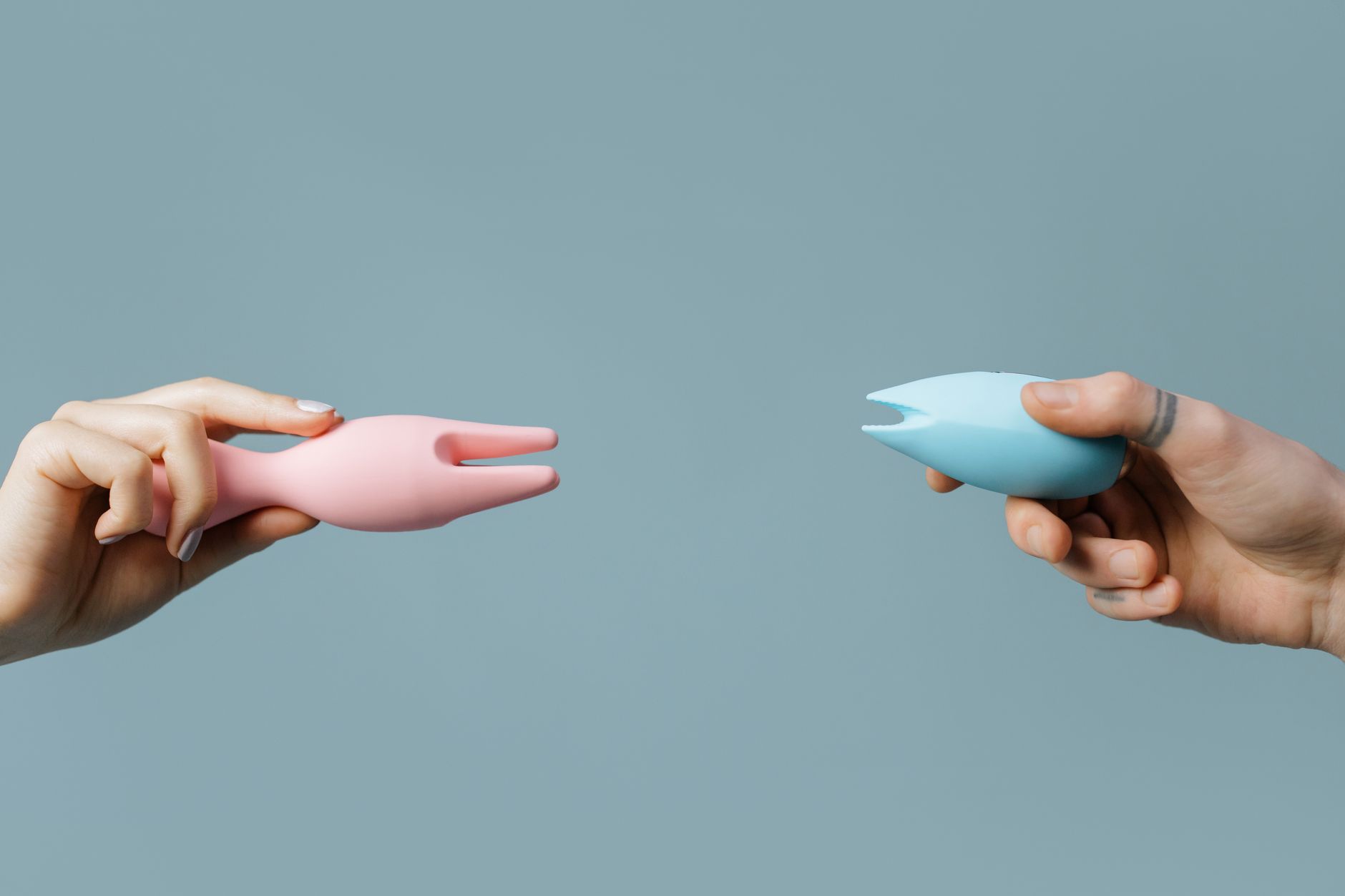
Lemon clitoral vibrators like the ones from Buy Lems Sex Toy work particularly well here because they standardize sensation in a way a partner's hand or mouth simply can't. The suction pattern stays consistent. The intensity doesn't fluctuate based on someone else's fatigue or attention. This might sound cold, but it's actually liberating.
When you bring a lemon clitoral vibrator into partnered sex, you're not replacing your partner. You're bringing your known quantity into the shared space. You're saying: this is what works for my body, this is the baseline sensation I need. Everything else can build from there.
Many couples find this actually improves the partnered experience because the pressure to manually produce an orgasm is gone. Your partner can focus on closeness, on what they're feeling, on the emotional part instead of being stuck in technical problem-solving mode.
Starting the conversation
The tricky part isn't the toy itself. It's the context. Introducing a lemon vibrator into partnered sex can feel loaded if you don't frame it clearly.
Here's what works: separate the tool from the relationship feedback. Don't open with "I can't come with you." Open with "I want to try something that might feel better for both of us." That's different. One sounds like a problem with your partner. The other sounds like exploration.
Bring it up outside the bedroom. Not during sex, not in a vulnerable moment. Over coffee or in the car. Show them what you're thinking about, maybe let them hold it, normalize it as an object. Then say something like: "I noticed I feel really good with this alone. I'm curious what it would be like to use it together. Would you be interested in trying that?"
Responses vary wildly. Some partners immediately get it. Some need reassurance that this doesn't mean they're not enough. The honest conversation is: you are enough. This is about knowing myself better, not about you being inadequate.
How to actually use it together
Start slow. Don't pull out a lemon sucker in the middle of intense sex your first time. That's sensory overload and it tends to break the mood.
Instead, try this: foreplay phase. You're both undressed, you're touching, kissing. Your partner is doing what they normally do. Then you introduce the lemon vibrator. Use it on yourself while they watch, while they're touching other parts of your body. Let them see what the sensation does to you. This serves two purposes. One, it gives your partner permission to relax about performance. Two, it shows them exactly what works.
Once you're both comfortable, they can hold it while touching you elsewhere. Or you hold it while they're inside you or stimulating other areas. The rhythm becomes collaborative instead of adversarial.
The key thing: communicate in real time. "That feels good," "try a different pattern," "more pressure," whatever. Turn it into a conversation instead of silent evaluation.
The solo-to-partnered translation problem
Here's what catches people. You know exactly what you need alone. You reach a certain pattern, a certain rhythm, and your body knows where to go. But that might be pattern 4 out of 5 on a lemon vibrator, at a specific angle, with a specific amount of pressure.
Try to replicate that exactly with a partner and it falls flat. Not because the sensation is bad. But because context changes everything. Alone, you're fully focused. With a partner, part of your attention is on connection, on them, on reciprocity. Your nervous system is in a different state.
So instead of chasing the exact same sensation, chase the same outcome. You know what your body needs to build toward orgasm: gradual intensity, sustained pattern, zero interruption. A lemon clitoral vibrator maintains that framework while your partner handles the emotional and physical intimacy around it.
What happens when you bridge the gap
Most couples report that introducing a lemon vibrator into partnered sex actually deepens connection instead of creating distance. Because suddenly there's no performance anxiety. You're not grinding away hoping something eventually works. You're both present. Your partner sees you actually feel good. That's powerful for them too.
You also learn something valuable: solo pleasure and partnered pleasure don't have to feel identical to both be satisfying. They can be different expressions of the same desire. Alone is about knowing yourself. With a partner, it's about being known. Those are different activities with different goals.
One more thing: using a lemon vibrator with a partner often makes solo time better too. Not because you're avoiding your partner. But because the pressure lifts. You're not secretly worried that you can't come "normally." You already proved you can. Now it's just about what feels good in any given moment.
Troubleshooting the common friction points
If your partner feels threatened, circle back to the reassurance. This isn't about them being inadequate. It's about you being equipped. The toy doesn't replace them. It supports them.
If you feel self-conscious using it in front of them, remember: they want this. They want you to feel good. That's not selfish. That's the whole point. Sometimes we need permission to stop performing pleasure and start experiencing it.
If the sensation feels different with a partner present (and it often does because your body is in a different nervous system state), that's normal. You're not doing it wrong. Give it time. Three or four sessions usually shifts the association.
If you orgasm much faster with the lemon vibrator than your partner might expect, talk about it. "I want to use this for five minutes solo first, then we do the rest together" is a totally valid boundary. Or "I come quickly with this and then we can do what you want." Clarity beats awkward assumptions every time.
People also ask
Can I use a lemon clitoral vibrator if I've never used toys with a partner before?
Absolutely. In fact, introducing your first toy as a shared activity is often easier than trying to hide it. There's no shame around it. You're experimenting together. That's collaborative, not deceptive. Start with the conversation first, show them what you're thinking, and let them choose to be part of it.
What if my partner gets jealous of the toy?
That jealousy usually isn't about the toy. It's about feeling replaced or inadequate. The antidote is specificity. Say: "This isn't about you not being enough. This is about me knowing my body better. I want that knowledge to benefit us both." Then follow through. Use the lemon vibrator in ways that include them. Let them be part of it. Jealousy often fades when they see it's not a solo activity.
How do I know if using a lemon vibrator during partnered sex will actually help?
Try it twice before deciding. The first time is always weird because novelty and self-consciousness are high. The second time, your nervous system has context and can actually relax into it. If it still feels disconnected after that, adjust. Maybe you use it during foreplay only. Maybe your partner holds it. Maybe you need to talk more about what you each want. But one trial isn't enough data.
Should I use the same lemon vibrator solo and partnered, or get a second one?
That's your call. Some people like having a dedicated "solo" device and a dedicated "partnered" device just for psychological separation. Others find that weird. If you go the two-device route, you might pick the same model in different colors so there's no confusion about which is which. Or just use the one you have and clean it between activities.
What if I can only orgasm with the lemon vibrator and my partner feels like they're not needed?
This deserves a real conversation. The honest truth: if you can only orgasm with vibration, your partner probably can't replicate that sensation with their body. And that's not a flaw in either of you. It's a compatibility issue with stimulation types. The solution is redefining what partnered sex is for. Maybe it's not always about you orgasming. Maybe sometimes it's about connection without the expectation of climax. Maybe it's about you both feeling good in different ways. That's a conversation worth having with patience and honesty.
Will using a lemon vibrator during sex make me less sensitive to my partner's touch?
No. Sensitivity to vibration and sensitivity to touch are different neural pathways. Using a lemon clitoral vibrator doesn't numb you to other sensations. If anything, it trains your nervous system to recognize and pursue pleasure more readily, which can enhance touch sensitivity overall.
The real work
Using a lemon vibrator isn't going to fix a disconnected partnered sex life on its own. But it can be a doorway to better communication about what actually works in your body. It can take the pressure off performance and create space for curiosity. It can let your partner see what genuine pleasure looks like in your body instead of guessing.
The device is just the vehicle. The real work is the conversation. You knowing yourself. Your partner being willing to learn who you are. That's where the bridge gets built.