
Let's name what's actually happening
You're curious about lemon vibrators. You're also scared. Both things are true at the same time, and that's not a sign something is wrong with you. It's actually how your nervous system is supposed to work when you're considering something unfamiliar. The anxiety isn't a red light telling you to stop. It's just information.
The problem is that most people treat it like a red light anyway. They feel the nervousness, assume it means the idea is bad, and shut it down. But there's a middle path: you can feel anxious and still move forward. You just need permission to do it slowly.
Why new sensations trigger anxiety in the first place
There are three neurological reasons this happens. First, your body doesn't know what to expect, so your nervous system defaults to caution. Second, if you've been told anything negative about pleasure or your body in the past, that old message gets louder when you're about to try something new. Third, there's performance pressure baked in. You might be wondering: will it work? Will I feel awkward? Will I orgasm? That stack of unknowns activates your threat response.
None of this means you shouldn't explore. It just means you need a framework that lets your nervous system feel safe while you're being curious.
Start with curiosity, not expectation
This is the shift that changes everything. Instead of asking "Will this make me come," ask "What does this actually feel like on my skin." Instead of "Is this normal," ask "What parts of this are interesting to me." You're not performing for anyone. You're gathering data about yourself.
When you hold a lemon clitoral vibrator for the first time, do this: turn it off and just hold it. Feel the weight. Feel the texture. Notice the temperature. None of this is weird or wrong. You're doing reconnaissance. Your nervous system needs to build familiarity with an object before it's comfortable with stimulation.
The three-session framework
I recommend spreading out your first exploration across at least three separate times. This does two things for your nervous system. It creates repetition, which tells your brain "this is safe, we've done this before." It also prevents the pressure that comes from trying to have a big revelation the first time.
Session one: Introduction and texture. You're clothed. The vibrator is off. You're exploring it like you'd explore any object you just brought into your home. Touch it. Look at it. Run it along your forearm. Notice sensations without any genital contact. This feels anticlimactic on purpose. Your only job is to feel less strange about it existing.
Session two: Low-stakes sensation. You're in private. You can be clothed or not. Turn it on at the lowest setting and test it on non-genital skin first. Inner thigh. The outside of your hip. Your neck or earlobe. You're learning how the vibration feels without the pressure of it having to be erotic or intense. You're just practicing being touched by it.
Session three: Direct exploration, no goal. You have time. You're not watching the clock. You've removed any external pressure. Now you can bring it closer to your vulva, but still with no expectation. The goal is not orgasm. The goal is understanding what feels good, what feels overwhelming, what you want to explore more, and what you'd rather skip. Nothing is wrong. This is all information.
Managing the overwhelm when it arrives
Lemon vibrators, including the lem vibrator model, use clitoral suction rather than standard vibration. This means the sensation feels different from what you might expect. Some people find it gentler. Some find it more intense. Either way, you might hit a moment where your nervous system says "this is too much."
Here's what to do in that moment: pause. Take your hand away. Breathe. There's no shame. You haven't failed. You've actually collected crucial information. Your body just told you the setting was too high, the pressure was too much, or the timing wasn't right. All of that is useful.
Then try one of these adjustments: switch to a lower setting if there is one, move it slightly away from direct contact, reduce the time you spend with it on, or simply stop and try again another day. You're not broken. You're calibrating.
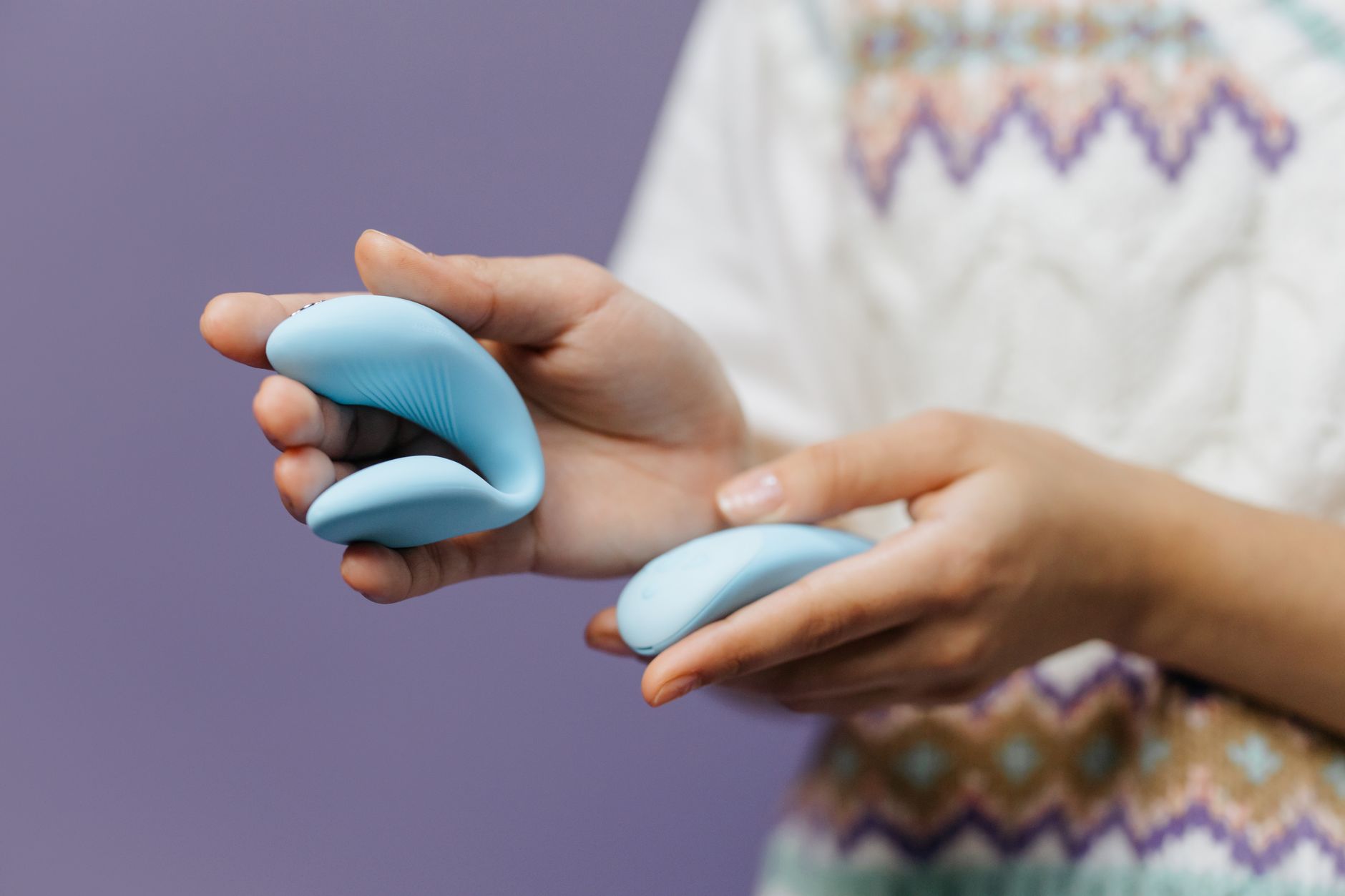
Photo by cottonbro studio on Pexels
The narrative you're telling yourself matters
Anxiety about new sensations often comes from a story you've internalized. Maybe someone told you vibrators were "cheating." Maybe you picked up the message that wanting pleasure was selfish. Maybe you're worried about being "weird" or "too much." These narratives run deep, and they whisper when you're alone with something new.
The work is to notice that story without buying it completely. You can think "this is weird" and also try it anyway. You can worry "what if I can't orgasm" and also explore without needing that outcome. The anxiety doesn't have to disappear for you to move forward.
One thing that helps: separate this exploration from anyone else's judgment. Your partner doesn't need to know yet. Your friend doesn't need to know. This is for you. The only person who gets to decide if it's good is you.
When to involve a partner (and how)
If you're in a relationship, there's sometimes pressure to make this a couples' thing. You might worry that exploring alone feels like you're excluding them. Or they might express interest. Here's the boundary I recommend: do your own discovery first, alone. Once you know what you like and what feels safe to you, then you can decide if and how to share it.
When you're ready to involve a partner, the conversation starts with this: "I want to explore something alone first because I feel less pressure that way. Once I understand it better, I'd like to tell you about it." That's it. You're not asking permission. You're not making them wrong for not being included. You're protecting your own learning process.
If they respond with curiosity and support, great. You can then explore together. If they respond with judgment or exclusion, that's important information too. It tells you something about how your relationship handles your pleasure.
A gentle reminder about what anxiety actually means
Here's the thing most people miss: anxiety doesn't mean "don't do this." Sometimes it means exactly that. But often it just means "this is new, and your nervous system is doing its job." The only way to know which is true is to move toward it slowly and pay attention. If you move forward and feel increasingly safe, excited, and curious, the anxiety was just resistance to novelty. If you move forward and feel increasingly trapped, unsafe, or violated, then yes, that's a stop sign.
Anxiety about lemon vibrators or any clitoral vibrator is often the first kind. But you get to find out for yourself. You get to go at your pace. You get to change your mind. You get to do this however feels right.
The goal isn't to become someone who has no anxiety about new sensations. The goal is to become someone who feels anxious and does it anyway, because what's on the other side of that anxiety might be something that makes you feel good.
FAQ: Common questions when you're feeling nervous
Is it normal to feel scared the first time you use a lemon vibrator?
Completely normal. Your nervous system is encountering something new. The fear isn't a character flaw. It's just your body's ancient security system doing its job. What matters is whether the fear gets smaller as you become more familiar with it, or whether it grows. If it gets smaller, keep going. If it grows, pause and reassess.
What if I use a lemon clitoral vibrator and nothing happens the first time?
Then nothing happened, and that's okay. Maybe the timing wasn't right. Maybe the setting wasn't right. Maybe you needed more warm-up time. Maybe you needed to be less in your head about it. One session of nothing doesn't mean it will never work. It just means that specific combination of variables didn't land today. Try again another time with one small change.
How do I know if my anxiety is a red flag or just normal newness?
Normal newness anxiety usually decreases over repeated exposures and feels mixed with curiosity. Red flag anxiety usually increases with each attempt and feels pure dread with no spark of interest. Also notice: are you anxious about the object itself, or anxious about what it means about you. The first is normal. The second suggests you might need to work on that deeper belief before diving in.
Can I use a lemon sucker toy while still feeling nervous?
Yes. You don't have to feel confident or certain to use one. You just need enough curiosity to move forward slowly. Anxiety and exploration can coexist. You're not supposed to feel fearless. You're just supposed to feel curious enough to try despite the fear.
What should I do if my partner pressures me to try a lemon vibrator before I'm ready?
Honestly? That's a bigger issue than the vibrator. A partner who pressures you into sexual exploration you're not ready for isn't respecting your consent. You get to say no. You get to say "I'm interested but I need time." You get to take as long as you need. If they can't support that, that's information about the relationship itself. Check out how lemon vibrators can help when desire feels mismatched with your partner if that's your situation.
Is there a best lemon clitoral vibrator for someone anxious about sensation?
The lem vibrator is actually a great starting point because the suction sensation is different from traditional vibration. Some people with anxiety find it feels less intense than they expected. But everyone's threshold is different. There's no universal answer. Your best bet is to start with something rated as beginner-friendly and with adjustable intensity, so you can control exactly how much sensation you're getting.
The bigger picture
Learning to explore your own pleasure when anxiety is present is actually foundational work. It teaches you that you can be scared and do something anyway. It teaches you to listen to your body. It teaches you to distinguish between real harm and just unfamiliarity. Those skills transfer everywhere.
Your anxiety about trying new sensations isn't a flaw. It's a signal that you're about to grow into something new. Give yourself permission to move slowly. Give yourself permission to feel nervous. Give yourself permission to change your mind. And give yourself credit for being willing to explore your own pleasure even when it feels a little bit scary. That takes real courage.
When you're ready to talk about what you've discovered or to ask for support, you can always reach out at /contact.