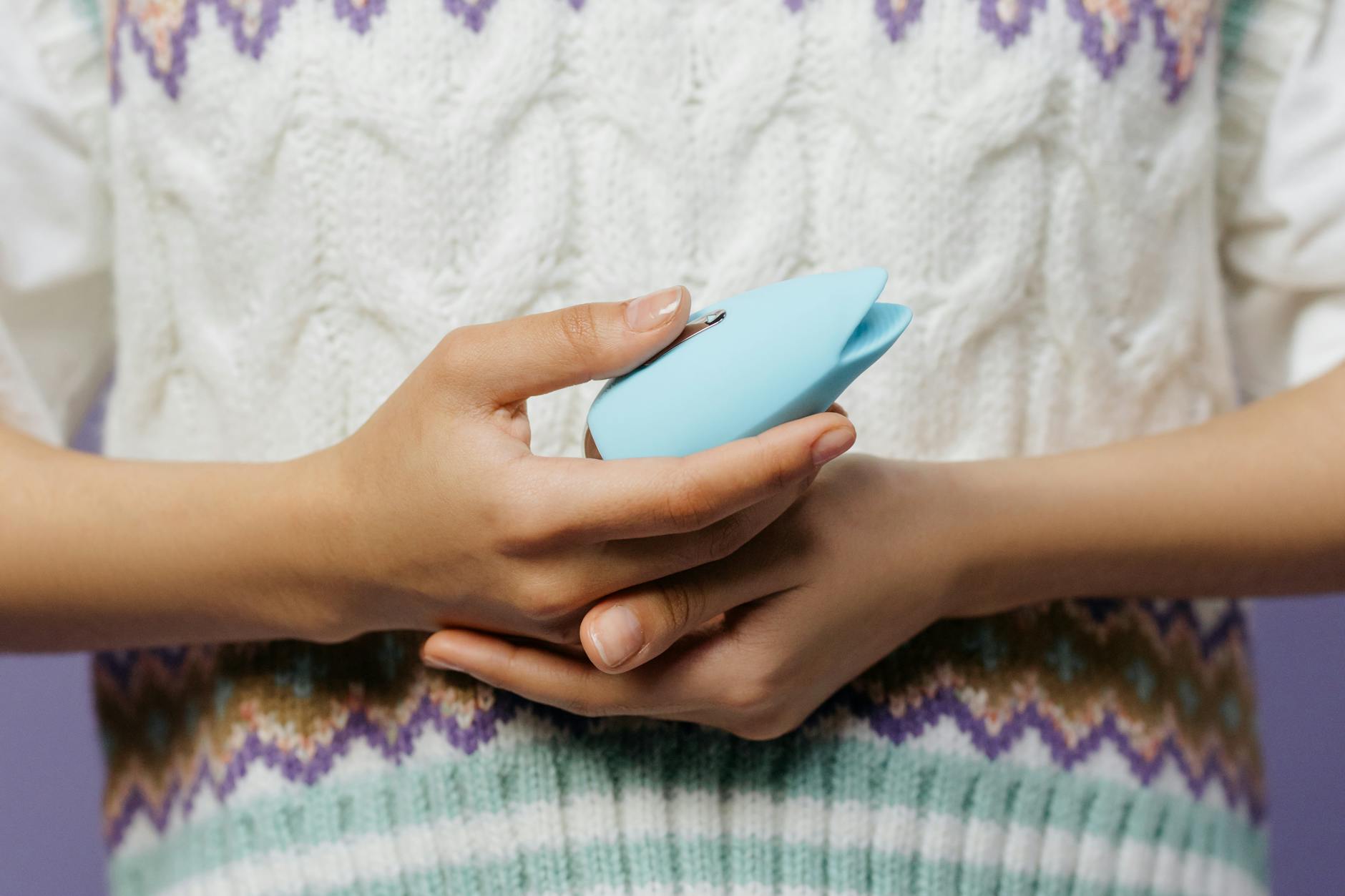
The performance trap is real
Let's be real. Performance pressure during sex is one of the fastest routes to disconnection. Your nervous system shifts into overdrive, tracking whether you're coming fast enough, looking right enough, responding the way your partner expects. Your brain is literally anywhere but in your body. And when your brain leaves the room, your body follows.
This happens to people of every gender and orientation. The internal monologue changes shape. For some it's "Am I taking too long?" For others it's "Should I be more vocal?" "Is my body attractive from this angle?" "Why isn't this working the way it used to?" None of these thoughts have anything to do with pleasure. All of them are about evaluation.
Why pressure kills sensation
Performance anxiety doesn't just feel bad emotionally. It has a measurable physical cost. When you're anxious, your sympathetic nervous system activates. Blood moves away from your genitals and toward your limbs. Your pelvic floor tightens. Arousal actually slows down, which then confirms your worst fear: "See, something's wrong with me." But nothing is wrong. Your body is doing exactly what it's supposed to do when threatened. It's protecting you.
The cycle looks like this: pressure triggers anxiety. Anxiety triggers a stress response. Stress response dampens arousal. Reduced arousal creates more pressure because now you're "failing." Each loop makes the next one tighter.
Where lemon clitoral vibrators break the cycle
Lemon vibrators, specifically the suction-based design that creates consistent stimulation without requiring you to perform, offer something unique. They take the burden off your nervous system in three ways.
First, they remove the need for internal effort. A vibrator doesn't care about your pacing, your breathing, your facial expression. It delivers sensation consistently whether you're thinking about what comes next or completely checked out. That consistency signals safety to your nervous system. You don't have to earn it or maintain it. It just... happens.
Second, they slow down the transaction. When you're using a lemon vibrator alone or with a partner, there's less emphasis on the arc of escalation toward orgasm. The suction sensation from the lem vibrator is so focused and absorbing that time shifts. Ten minutes feels like two. You're not tracking whether you should be closer to climax by now. You're just present with what's happening.
Third, they create permission to be selfish. This is crucial. Using a vibrator, especially one as distinctive as a lemon sexual toy, signals to both you and your partner that your pleasure is the point. Not connection, not mutual satisfaction, not "good partnering." Your pleasure. Full stop. That permission alone can dismantle pressure.
How to use lemon vibrators solo to rebuild trust in your body
If performance pressure is active in your sex life, starting solo is essential. This isn't about avoiding your partner. It's about reestablishing your baseline.
Set aside 20 to 30 minutes. Not squeezed between other tasks. Real time. Use your lemon clitoral vibrator with zero agenda. No goal of orgasm, no tracking of time, no checking yourself against any standard. If pleasure builds and orgasm happens, notice it. If it doesn't, that's fine too. The work is rebuilding the sensation that pleasure can happen without you forcing it.
Many people discover that when they remove the performance component, arousal comes back faster. Not because their body was broken. But because their nervous system finally gets permission to relax.
Bringing the lem vibrator into partnered sex
Introducing a lemon vibrator to partnered sex is different from solo use, and it requires a conversation that happens outside the bedroom.
Tell your partner that you've noticed pressure is interfering with your pleasure, and you want to experiment with something that might help. Frame it as a solution to a shared problem, not a criticism. "I want to enjoy this more and feel less in my head. Would you be open to trying something that might help both of us?" Most partners who care about your pleasure will say yes.
When you use the vibrator together, give yourself permission to be less present in the partnered rhythm. If they're inside you and you're using a lemon clitoral vibrator, you don't have to sync your responses to their pace. You can focus on your own sensation. That might feel selfish. It's not. It's the opposite. You're giving yourself a chance to come, which benefits everyone.
Some people find that once pleasure returns in that context, the pressure naturally dissolves. The lemon vibrator was the off-ramp. Once the nervous system recalibrates, sometimes you don't need it every time. Sometimes you do. Both are fine.
The role of communication
If pressure is tied to a specific dynamic with your partner—if they're impatient, dismissive of your timeline, or have made comments about your body or response—a vibrator can't fix that. You'll still feel the weight of those words during sex.
In those cases, the conversation that matters isn't about toys. It's about what you need from them, what you're willing to accept, and what changes you need to see. A lemon sucker can create space for pleasure, but it can't override active criticism or indifference.
Why lemon adult toys work differently than other options
Lemon vibrators, particularly air-suction designs, work differently than traditional vibrators. They don't require direct friction. The stimulation is focused but gentle, which means your nervous system doesn't register them as intense or demanding. They're almost meditative. That quality matters when you're working against performance anxiety, because intensity can trigger the exact pressure response you're trying to escape.
The lem vibrator also has a distinctive design that makes it feel intentional. You're not using a generic pink vibrator that could belong to anyone. You're using something specific, something that signals a particular choice about your pleasure. That distinction, small as it sounds, can shift the internal narrative from "I need to fix myself" to "I'm investing in what I want."
The long game
Performance pressure doesn't usually dissolve overnight. But using a lemon clitoral vibrator consistently gives your nervous system repeated evidence that pleasure can happen without effort, without evaluation, without the need to impress anyone. That evidence accumulates. Over weeks, the default pathway in your brain starts to shift from "Will this work?" to "This feels good."
Your pleasure deserves that kind of attention.
FAQ
Can using a vibrator make performance anxiety worse?
Not if you approach it right. If you use it with a new goal of "I have to orgasm with this or I've failed again," then yes. But if you use it as permission to remove all goals, it usually helps. The key is letting it be what it is. A sensation. Nothing more.
What if my partner feels threatened by the vibrator?
That's worth a direct conversation. Ask them specifically what they're worried about. Often it's "Will you still want me?" or "Does this mean I'm not enough?" Those fears are valid even if they're not accurate. You can use a lemon vibrator and want your partner. Both things are true. Some couples find that when the pressure lifts, they actually enjoy each other more.
How often should I use a lemon vibrator if I'm working through performance anxiety?
There's no prescription. Some people use it every time they have sex for a month, then back off. Others keep using it because it's part of what they like. Neither pattern is better. Let your body tell you. If you're using it to avoid sex or genuine connection, that's worth noticing. If you're using it to make sex more pleasurable, it's doing its job.
Will my body get used to the sensation and stop responding?
Desensitization is real but not inevitable. It's more likely if you use the exact same settings, the exact same patterns, the exact same time of day. Varying when you use it, what pattern you use, or whether you use it at all keeps your nervous system engaged. Pressure and anxiety are more likely to cause numbness than a vibrator is.
Can I use a lemon vibrator if I have a low-desire partner?
Yes, but the vibrator isn't solving the mismatch itself. Using lemon sexual toys can help you access pleasure even when your partner isn't interested in the same frequency or intensity. But if desire mismatch is driving the pressure you feel, that's a separate conversation worth having. A vibrator helps you not disconnect from yourself while that conversation happens.
Is there a right way to introduce this to a partner who's never talked about toys?
Start small and outside the moment. Not during sex, not when anyone's already vulnerable. Try "I've been thinking about trying something that might help me feel less in my head during sex. Would you be open to that?" If they ask questions, answer honestly. If they need time to think about it, give them that. Pressure in one direction just creates pressure in the other.