
Let's name the actual problem
One partner wants to be inside. The other partner needs direct clitoral contact to orgasm. Both things are valid. Both things matter. And for years, the assumption has been that one of you has to sacrifice what feels good.
You don't. A clitoral vibrator like the Lem changes this equation entirely.
Why this mismatch happens (and why it matters)
Here's the physiology. About 75 percent of people with vulvas require direct clitoral stimulation to reach orgasm during partnered sex. The clitoral bulbs extend inside the body, yes, but the clitoris itself sits externally. When a partner penetrates, they're stimulating the vaginal wall and the front wall of the vagina. That's not nothing. But for many people, it's not enough on its own.
Meanwhile, many people with penises or those using strap-ons find that penetration is how they access their pleasure most reliably. The internal pressure, the friction, the feeling of being inside. It's not just about sensation. It's about the specific kind of intimacy that penetration creates.
Both needs are normal. The problem isn't the mismatch. The problem is that for decades, the solution was "one of you adapts." Usually the person with the vulva adapted, which meant faking it, feeling resentful, or not coming at all.
A lemon clitoral vibrator solves this by letting both people have exactly what they need at the same time.
How the Lem works during partnered penetration
The lemon suction vibrators use gentle air-pulse stimulation rather than traditional vibration. This matters because suction stimulates the clitoral nerve endings without the jarring sensation of a standard vibrator pressing against sensitive tissue.
Here's the practical setup: your partner penetrates. You hold the Lem or position it against your clitoris. The suction patterns work independently of what's happening inside. Your partner feels the internal pressure and movement they need. You're receiving direct clitoral stimulation that actually builds toward orgasm.
The Lem's design makes this simple because it's small enough to position without getting in the way, powerful enough to create real sensation, and it doesn't require you to hold it perfectly still. Most of the pressure comes from the device itself, not from your hand, which means you can move with your partner.
The logistics that actually work
Let me walk through how this looks in real time.
Positioning matters. Most couples find that woman-on-top or lying on your side facing your partner works best because it gives you easy access to your clitoris and lets your partner control depth. If you're lying on your back with your partner on top, you can tuck the Lem under you or hold it to the side. If you're on your knees, your hands are free to guide it.
Start the vibrator first. Turn on the Lem at a lower pattern before penetration begins. This gives your body a chance to respond and gives your nervous system time to register pleasure before adding the extra input of having your partner inside. Once you're aroused and your partner is ready, they enter slowly.
Rhythm doesn't have to match. This is the part that surprises people. Your partner can move at their pace. The Lem does its own thing at your pace. You're not trying to sync them. Your partner is watching your face, listening to your breathing. You're focused on the clitoral sensation. Separately, they also feel the internal pressure they need.
Communication mid-session is normal. "Go deeper," "slow down," "change the pattern," "that's the spot." Say it. Your partner wants to know what's working. This is the opposite of the old model where people stayed silent and hoped for the best.
Why this changes the relationship dynamic
Honestly, this is the part I see shift most in my practice. When both people know that their pleasure is non-negotiable and designed into the encounter, the entire energy changes.
The person with the vulva stops monitoring whether they're "taking too long" or "being too demanding." The person penetrating stops feeling like their pleasure is incompatible with their partner's. You're not fighting over what the sex should be. You're both getting what you came for.
This also means you're more likely to want sex again. Not because you're obligated, but because you know you'll actually finish. That changes frequency and how you approach it.
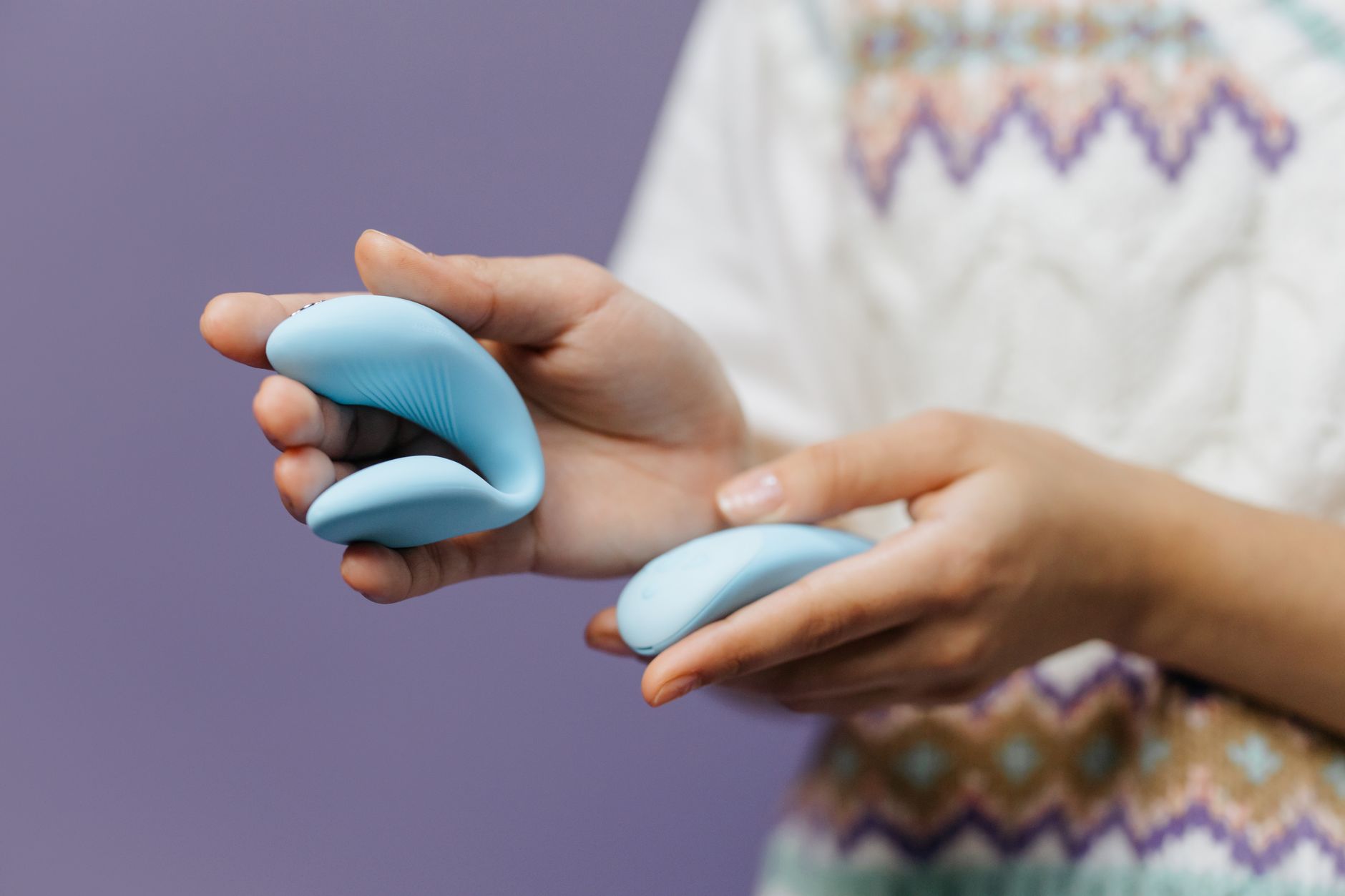
Photo by cottonbro studio on Pexels
The patterns that work best
Most lemon clitoral vibrators like the Lem have multiple suction patterns. Here's how to think about them during partnered play.
Patterns 1 and 2 are warm-up patterns. Lower intensity, gentler pulse. Use these when you're first starting or when you're building arousal alongside penetration. These patterns let your partner move without you being distracted by intense sensation.
Patterns 3 and 4 are the sweet spot for most people. Enough intensity that you feel it clearly, but not so intense that you lose connection with your partner. You can sustain these for longer and still feel present with what's happening internally.
Patterns 5 and higher are finishing patterns. These are more intense. If you're close to orgasm and need the extra push, go here. But save it for the last minute or two. Starting at highest intensity means you have nowhere to go and your body acclimates quickly.
Want to explore more about choosing the right clitoral vibrator setup for your dynamic? The choice matters more than most people realize.
What to do if it feels awkward at first
It often does. You're adding a device to something that's been just the two of you. That's new, and new things are clunky.
Plan a dedicated session specifically to practice this. Not full sex. Just lying together, your partner inside you, and you experimenting with what patterns feel good and what positions work logistically. Remove the pressure to orgasm. You're gathering information.
Talk about what you notice. Does it feel weird when the vibration gets intense? Does your partner feel the vibrations too (many do, and some like it). Are there positions where it feels cramped? Figure this out while you're not trying to come.
Second attempt is almost always better because you know what to expect.
Common questions couples have
"Will the vibrator bother me?" If you're the penetrating partner, you'll often feel the vibrations through the tissue walls. Some people find this adds to their sensation. Others find it distracting. This is exactly what the practice session is for. You'll know in about five minutes.
"What if one of us comes first?" Nothing has to stop. The penetrating partner can slow down while the other person continues with the vibrator. Or you can decide you're both done. There's no rulebook. This is something you decide together beforehand so there's no awkward pausing.
"Is this emasculating?" I'm going to be direct. If you think your partner using a vibrator means you're not enough, that's worth examining before you're in bed together. A device isn't replacing you. It's supplementing what your body can do. Two people can be in the same bed and still have different pleasure needs. Honoring that is mature. Resenting it is understandable but ultimately selfish.
"What lube should we use?" Water-based only with silicone toys. This protects the device and works during penetration. Reapply as needed. Don't assume because there's penetration happening that there's enough lubrication for the clitoral work. These are separate.
When to reach out for help
If you've tried this a few times and it's still creating tension, that's information too. Sometimes the issue isn't the vibrator. Sometimes the issue is that one partner resents the other's pleasure requirements, or there's a deeper mismatch in how you approach sex generally.
That's couple's work, not a device question. You can always reach out if you want to talk through it, but a therapist specializing in sexuality and relationships is the better move.
The actual payoff
Here's what I see happen: couples who solve this problem stop seeing sex as a negotiation and start seeing it as a collaboration. That ripples into other areas. You're more generous with each other because you're not keeping score. You know your partner actually cares about your pleasure because they're willing to adapt the experience so you can have it.
That's not small. That's the foundation of long-term desire.
FAQ
Can you use a lemon clitoral vibrator during all positions with penetration?
Most positions work, but some are easier than others. Woman-on-top, side-by-side, and you-on-your-back-with-partner-in-front are the most practical. Positions where your partner is completely on top of you can make device access tricky, though some couples manage it. The key is that you need enough hand access to position the vibrator where it needs to be.
What if the vibrator keeps slipping during penetration?
Firm pressure with your hand, combined with the suction from the device itself, usually keeps it in place. If you're experiencing a lot of slipping, check the vibrator's charge level. A weak battery reduces suction power. Also make sure your tissue isn't overly wet. Counter-intuitively, more lubrication can reduce suction. A little lubrication is necessary. A lot works against the device's mechanism.
How do you introduce this to a partner who's never used a vibrator during sex?
Don't surprise them. Have the conversation outside the bedroom. "I'd like to try using a clitoral vibrator when we have penetrative sex so I can actually orgasm." Make it clear this is about you getting your needs met, not about them failing you. Then, if they're open to it, have that practice session. Keep it light. Curiosity beats pressure.
Does using a lemon vibrator during partnered sex reduce sensitivity to your partner's touch?
No, but here's why that question matters. Some people worry that device use will make them less responsive to fingers, bodies, or penetration. The research doesn't support that. Clitoral vibrators don't desensitize tissue. They build your capacity to experience pleasure. You're not losing sensitivity to other touch. You're adding bandwidth.
Can you orgasm faster with a clitoral vibrator during penetration?
Usually yes. Most people do. The combination of internal pressure plus external clitoral stimulation creates a more complete sensation. Your body has more input to build toward climax. That said, faster isn't always better. Some people find they prefer the intensity of sensation, and the orgasm happens at whatever pace it happens.
What if you want clitoral stimulation but your partner doesn't want penetration?
Then you use the vibrator and your partner provides other stimulation. Hands, mouth, just holding you. Penetration isn't required for partnered pleasure. If your partner is only willing to engage if penetration is involved, that's a different conversation about what both people are actually wanting from sex.
This mismatch between needing penetration and needing clitoral stimulation has ended relationships that could have worked. It's also created decades of faked orgasms and resentment. You don't have to choose. Both things can happen. You just needed the right tool and the willingness to ask for what you actually want. That's the whole thing right there.