Here's the thing about uncertainty
Your partner isn't saying no. They're saying "I want to, but what if I do it wrong?" That's actually a really good sign. It means they're thinking about your pleasure, not just their own. The trap is treating their uncertainty like a barrier instead of what it actually is: an opening.
The nervous energy you're picking up on? That's not hesitation. That's anticipation with a security blanket still attached. Once you show them there's no "wrong" way to use a lemon vibrator together, that hesitation dissolves fast.
The conversation that changes everything
Don't ambush them with a toy mid-intimacy and hope they figure it out. That creates pressure. Instead, have this conversation when you're both clothed, calm, and not about to have sex.
Start simple: "I've been curious about using a lemon vibrator with you. Would you want to try that together?" Then pause. Let them actually answer instead of filling the silence with explanations.
If they say yes but seem uncertain, ask one clarifying question: "What are you most nervous about?" Listen. The answer tells you everything. Maybe they're worried about hurting you. Maybe they think they'll have to do all the work. Maybe they're just not sure what's supposed to happen.
Address the specific concern, not the general feeling. "I'm worried I'll do it wrong" gets a different answer than "I don't want this to change what we already do." One is about technique. The other is about reassurance that you're not replacing anything, just adding something.
Start with control in their hands
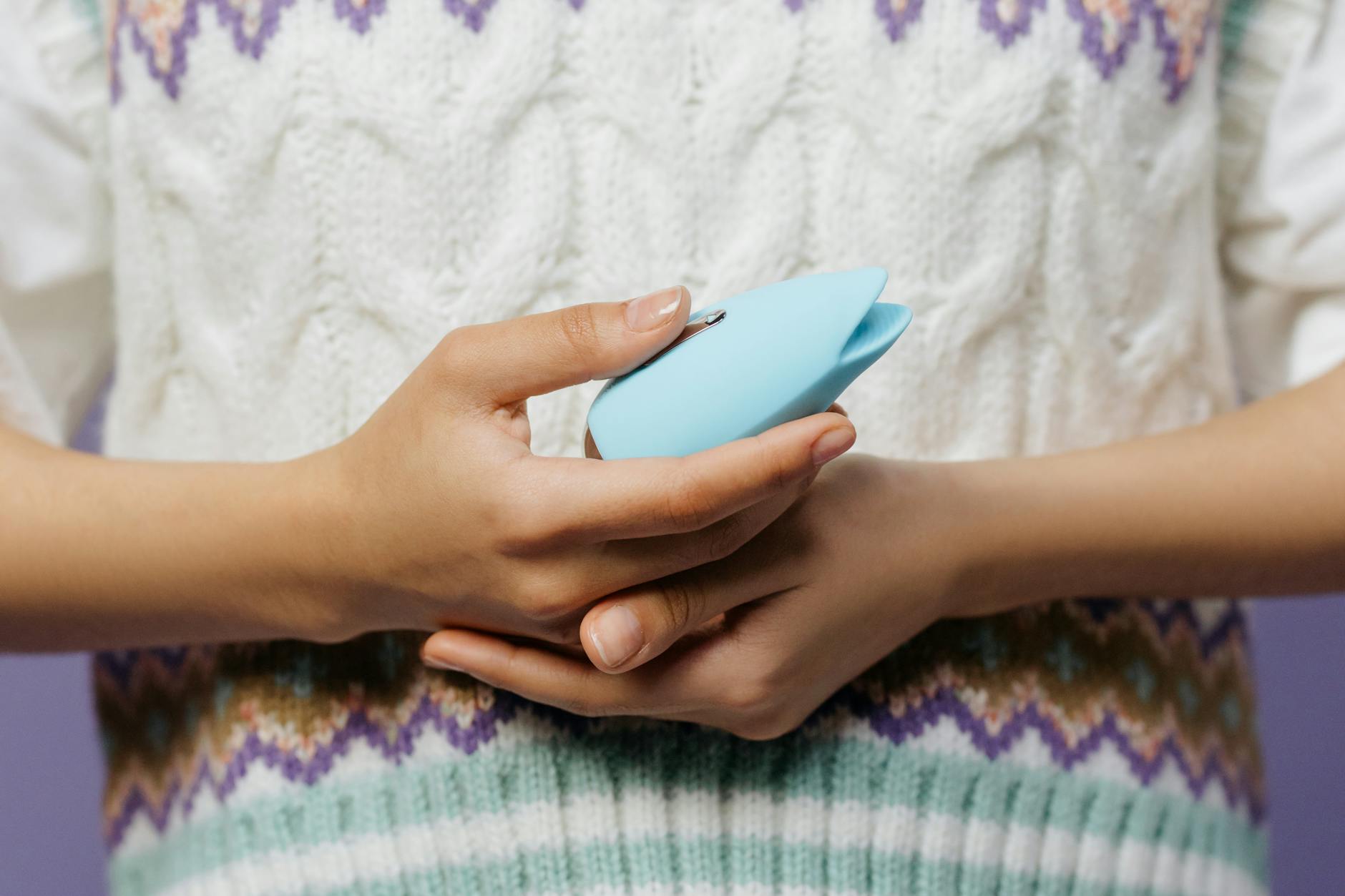
Hand them the lemon vibrator before anything intimate happens. Let them hold it, feel the weight, turn it on at different settings. No pressure. Just exploration.
Then say this: "You get to hold it however feels natural. I'll tell you what feels good as you go." That single sentence removes the fear of unknowing. They're not trying to guess your body. They're getting live feedback.
When you actually use it together, start with lower intensity settings. Not because you need to, but because your partner needs to see a direct line between what they're doing and how you respond. Low setting makes that connection crystal clear. They see the cause and effect. Confidence builds from there.
The three ways partners get nervous
Type one: They're afraid of causing pain. This one is easy. Tell them: "If something doesn't feel good, I'll say it immediately. There's no subtle hint. You'll hear it." Then follow through. If something doesn't work, say "less pressure" or "different spot." Not "that's a little much".
Type two: They think they'll interrupt the natural flow of sex. They won't. The lemon vibrator isn't a replacement for what you already do. It's an addition. They can use it while you're kissing them. While they're inside you. While they're inside you and you're on top. Say this out loud: "This works with what we already do, not instead of it." Then show them once.
Type three: They're performing for you, not with you. This one's trickier because it sounds like confidence but it's actually a different kind of uncertainty. They think the toy is a test they have to pass. Tell them: "I want to feel good and I want you to feel good using this with me. That's it. No performance, no proving anything."
What to do if they freeze mid-way
You're starting, things feel good, and then they slow down or go quiet. Don't keep going and hope they warm up. Just pause.
"You okay?" Three words. Then wait. They might say they're thinking too hard about what they're doing (performance anxiety). They might say they're worried they're holding it wrong. They might just need a beat to relax.
When a partner freezes during something new, it's almost never about the toy. It's about their internal narration. They're in their head. The fix is to get them back into their body.
Try this: "Here, hold it like this." Show them a grip. Or: "Let's just enjoy how this feels without thinking ahead." Or sometimes the simplest move is "I'm really enjoying this. You're doing great." Not because they need reassurance like a child, but because your actual enjoyment is the antidote to their uncertainty.
The rhythm that builds confidence
First time: You guide. They hold the toy and follow your direction. "Slower." "A little higher." "That spot, right there." They're learning your body's language through direct instruction.
Second time: They lead more. You give feedback but they're experimenting. "What happens if I move it in circles?" "Try holding it at this angle." They're starting to own the experience.
Third time and beyond: It's collaborative. They know what works. You know what they enjoy about using it. It becomes a shared skill, not something they're doing for you.
This timeline isn't rigid. Some partners hit this arc in one session. Some take three or four. It depends on their baseline comfort with sexuality and how much external pressure they carry about "being good at sex." Don't rush it.
What actually kills the momentum
Grading their effort. "That felt better than last time." Even meant as praise, it sounds like evaluation. They're not students. They're your partner.
Comparison. "My ex used to..." Just don't. Even if it's complimentary, it puts them in competition mode.
Assuming they know what you like. You have to narrate. "I like how that feels" is not optional information, even if you've been together for years. People's bodies change. Preferences shift. Assume nothing.
Rushing to orgasm as the goal. If you're tense about finishing, your partner feels it. The uncertainty spreads. Sometimes the point is just "this feels interesting and we're doing it together." The orgasm is a bonus, not the test.
When they want you to use it on yourself
Some partners feel more comfortable being a spectator first, then a participant. That's fine. Use the lemon vibrator solo while they watch. No pressure on them to do anything yet.
This actually builds their confidence faster because they see you using it unselfconsciously. They watch your reactions. They clock what makes you respond. By the time they touch it, they've already learned through observation.
If they're interested in participation later, great. If they stay more in a supportive role, that's valid too. Some people get off on watching more than doing. That's not less engaged. It's just different.
The conversation after
Don't skip this. About an hour later, check in. Not during the moment, not the next day. Just a normal "That was fun. How did you feel about that?" They might say it was exactly what they needed. They might say they want to do it differently next time. They might admit it took a beat to relax.
All of that is useful. You're building a feedback loop. Over time, uncertainty becomes expertise. Hesitation becomes enthusiasm.
The partners who seem naturally confident about toys? They're not born that way. They're people whose partners made it safe to experiment, corrected misunderstandings gently, and never made them feel like there was a right way versus their way.
FAQ
Why does my partner seem more nervous than I am about using a lemon vibrator?
In most relationships, the person receiving pleasure feels less responsibility for the experience. Your partner is holding a tool they think might be powerful, and they're worried about getting it wrong. That's a different anxiety than "what if this doesn't work for me." Reassurance helps, but mostly they need permission to learn as they go.
Can we use a lemon vibrator if my partner has never seen one before?
Absolutely. In fact, seeing it together for the first time is ideal. Let them hold it, ask questions, feel how it works before there's any intimacy involved. That five-minute orientation removes most of the mystery and uncertainty.
What if my partner is worried a lemon vibrator means I'm not satisfied with them alone?
This comes up more than people admit. Be direct: "This is something I want to experience with you, not instead of you." Then make it true. Use the vibrator while you're kissing them. While they're inside you. Make it a shared experience, not a solo tool they're holding from the sidelines.
How do I know if my partner is actually interested or just doing this for me?
Ask directly. "I want to make sure you actually want this." The hesitation you're interpreting as interest might just be politeness. It's possible they're fine with the idea but not excited. That's worth knowing.
Should I show my partner how I use the lemon vibrator solo first?
If your partner is nervous about partnered use, showing them solo use is one of the best things you can do. They get to see how you enjoy it without the pressure of performing. They learn your body's language through observation. That confidence translates directly to when they're holding the toy.
What if we start using it together and my partner wants to stop?
Stop. No questions in the moment. Check in later about why. It might be physical (something felt uncomfortable). It might be emotional (they got in their head). It might be practical (they want to try a different approach next time). Whatever the reason, a partner who's willing to try and then willing to pause when it's not working is doing everything right.
The shift happens quietly
After a few times together, your partner stops thinking about whether they're doing it right and starts actually enjoying the sensation. You'll notice because the hesitation disappears. They might even ask to try a different pattern or angle. That's when you know the uncertainty has officially dissolved into ownership.
That's the moment that matters. Not because they're now a pro, but because they've moved from "I hope I'm doing this correctly" to "I want to find out what this can do." That's the shift from participation to genuine engagement.
You're not building a toy user. You're building a partner who's comfortable exploring your pleasure with you. Everything else follows from there.