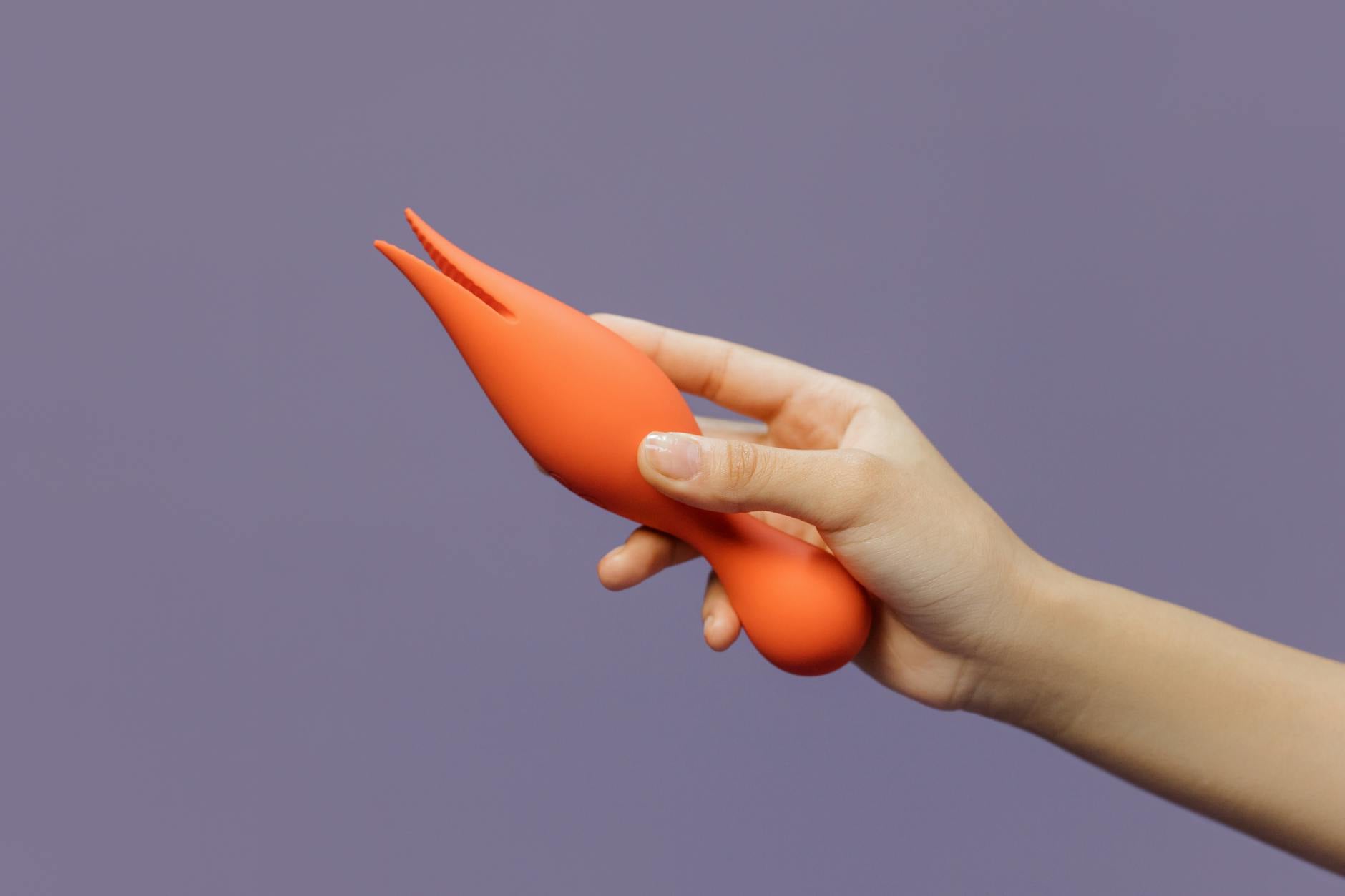
Let's talk about the sensitivity problem nobody wants to mention
Your clitoris gets more sensitive when you want it to, and weirdly numb when you don't. Hormones, medications, age, stress, past partners, latex allergies, even the wrong kind of lube can dull sensation. And then there's the flip side: sometimes direct touch feels so intense it crosses from pleasure into pain or overstimulation.
The problem with traditional vibrators is they work on friction. They buzz or oscillate against tissue, which can feel great when sensitivity is normal. When it's not, they either do nothing or they feel like too much.
Lemon clitoral vibrators work differently.
How air-suction technology changes the sensitivity equation
Instead of friction, lemon vibrators use gentle suction combined with pulsing air waves. This stimulates the clitoris without direct mechanical pressure. Think of it less like a back massager and more like a soft, rhythmic compression.
For people with sensitivity issues, this matters enormously. Here's why: the clitoris has roughly 8,000 nerve endings concentrated in an incredibly small area. When those nerves are inflamed, irritated, or just overstimulated, direct vibration can feel sharp or uncomfortable. Suction works on a different set of nerve pathways. It's gentler on irritated tissue but often more effective at triggering deep pleasure.
When sensitivity is dampened (from hormones, medications, or aging), suction pulls blood flow to the area and creates a slightly different sensation profile. Many people find that stimulation they can barely feel with a traditional vibrator becomes distinctly pleasurable with a lemon clitoral vibrator.
Which medications and conditions actually tank sensation
Several common culprits reduce clitoral sensitivity:
Hormonal birth control can dull sensation over months or years. The hormones reduce blood flow to genital tissue and lower baseline arousal. Many people don't connect the dots until they come off it and suddenly sensation snaps back.
Antidepressants and anxiety medications (especially SSRIs) are well-documented sensitivity killers. This is one of the most common complaints I hear from clients. A lemon vibrator's broader stimulation sometimes works around this problem where traditional vibrators don't.
Antihistamines reduce blood flow everywhere, including genitals. If you take them daily for allergies, this compounds over time.
Blood pressure and diabetes medications both affect vascular function, which means less blood flow to tissues that need it.
Hypothyroidism and other autoimmune conditions inflame tissue and dull nerve sensitivity. Some people don't realize their libido and sensation issues are connected to an undertreated thyroid.
If you suspect medication is the culprit, talk to your prescriber. Sometimes switching the dose, timing, or medication itself solves it. Sometimes it doesn't. Either way, a lemon clitoral vibrator can help bridge the gap.
Hormonal fluctuations and why suction helps
Estrogen and testosterone directly affect clitoral tissue thickness and nerve sensitivity. When either drops (from birth control, menopause, aging, or stress), the tissue gets thinner and sensation dulls.
Traditional vibrators rely on the tissue being thick enough and sensitive enough to respond. When it's not, you end up vibrating for 20 minutes and getting nowhere.
Lemon vibrators bypass some of this friction-dependent sensitivity by creating suction. The suction doesn't care as much whether tissue is thick or thin. It works by creating a pressure differential and pulsing against whatever tissue is there. For people mid-cycle, post-menopause, or on hormonal birth control, this is often the difference between sensation that works and sensation that doesn't.
Overstimulation is real and air-suction helps with that too
Some people's clitorises are just sensitive. Not in a good way. Direct vibration feels like a vibration. Suction feels different. More enveloping, less sharp.
This is wildly individual. Some people feel more with suction. Some people feel less. But the people for whom direct vibration borders on painful often find that suction crosses back into pleasure territory.
One other factor: you can modulate suction more naturally. With traditional vibrators, you're dealing with fixed intensity levels. With lemon vibrators, you can adjust how much of the device is in contact with skin, which changes the pressure and sensation dramatically. This kind of micro-adjustments can be the difference between pain and pleasure.
Why lemon sexual toys work better for recovery after irritation
If you've had an infection, irritation, or inflammation (yeast infection, bacterial vaginosis, contact dermatitis), direct vibration can feel raw for weeks afterward.
A lemon clitoral vibrator's gentler suction can help restore sensation without re-irritating tissue. Start at the lowest setting and let suction do the work. The sensation builds gradually without the sharp intensity that makes inflamed tissue angry.
For this use case, lemon adult toys are specifically designed to help. The air-suction design is gentler on healing tissue than any traditional vibrator.
The broader picture: when to see someone about sensitivity changes
If sensation has dropped significantly and isn't recovering, don't just assume it's permanent. A gynecologist can check for infection, inflammation, or hormonal shifts that are fixable. If you're on medication, talk to your prescriber about the timeline. Some medications take months to affect sensation, and sometimes stopping them restores it just as slowly.
If you've been using the same vibrator for years, desensitization is real. Switching to a completely different stimulus (like suction) often restores sensation that direct vibration killed.
If sensitivity swings wildly week to week, track it against your cycle, stress levels, and sleep. Often there's a pattern you can work with.
When you've ruled out medical stuff and figured out your sensory preferences, having the right tool matters. A lemon vibrator's design specifically addresses sensitivity issues that traditional vibrators can't solve.
How to use a lemon clitoral vibrator when sensation feels off
Start slow. Lowest setting. Let suction build sensation gradually instead of trying to force it with high intensity.
Wet it first. Suction works better with a little moisture. Water-based lube helps without being necessary.
Experiment with angle. Unlike traditional vibrators, how you position a lemon clitoral vibrator changes sensation dramatically. Slight adjustments matter.
Give it time. If your sensitivity is dampened from medication or hormones, it might take several sessions before suction feels like anything. Your brain and body need to learn a new sensation language.
If direct pressure still feels uncomfortable after trying suction, you might have a condition worth discussing with a specialist. Vestibulodynia, generalized vulvodynia, and other pain conditions need professional support alongside whatever tools help.
People also ask
Can a lemon vibrator help if I have no sensation at all? Sometimes. Suction stimulates differently than friction, so it's worth trying if traditional vibrators haven't worked. But if you have zero sensation, medication side effects, hormonal changes, or a nerve condition might be the issue. That's worth getting checked.
Do lemon clitoral vibrators work for everyone with sensitivity issues? No. Sensitivity issues have a hundred different causes. A lemon vibrator helps some people and not others. Try before committing. Many places have return policies so you can test it.
How is a lemon sucker different from a regular vibrator for sensitive skin? A traditional vibrator vibrates against tissue. A lemon vibrator uses suction plus pulsing air. For sensitive or inflamed tissue, suction is often gentler and less likely to trigger pain.
Should I use lube with a lemon clitoral vibrator? You can, but suction works better with just natural moisture. If you use lube, stick with water-based. Silicone lube can interfere with suction.
What if suction feels weird or uncomfortable? Suction is unfamiliar to most people. It takes time to adjust. Start with lowest settings, short sessions (2-3 minutes), and patience. If it still feels wrong after five tries, it might just not be your thing.
Can I use a lemon vibrator if I'm on antidepressants? Yes. Many people find that lemon clitoral vibrators work around SSRI-induced sensitivity loss better than traditional vibrators. The mechanism is different enough that it sometimes bypasses the problem.
The bottom line
Sensitivity isn't permanent. Neither is numbness. But they're real, and they affect pleasure more than anyone talks about. Lemon adult toys exist specifically because traditional vibrators don't solve every sensitivity problem. If your clitoris feels numb, oversensitive, or somewhere in between, suction-based stimulation might be the tool that finally makes sense for your body. That's worth trying.