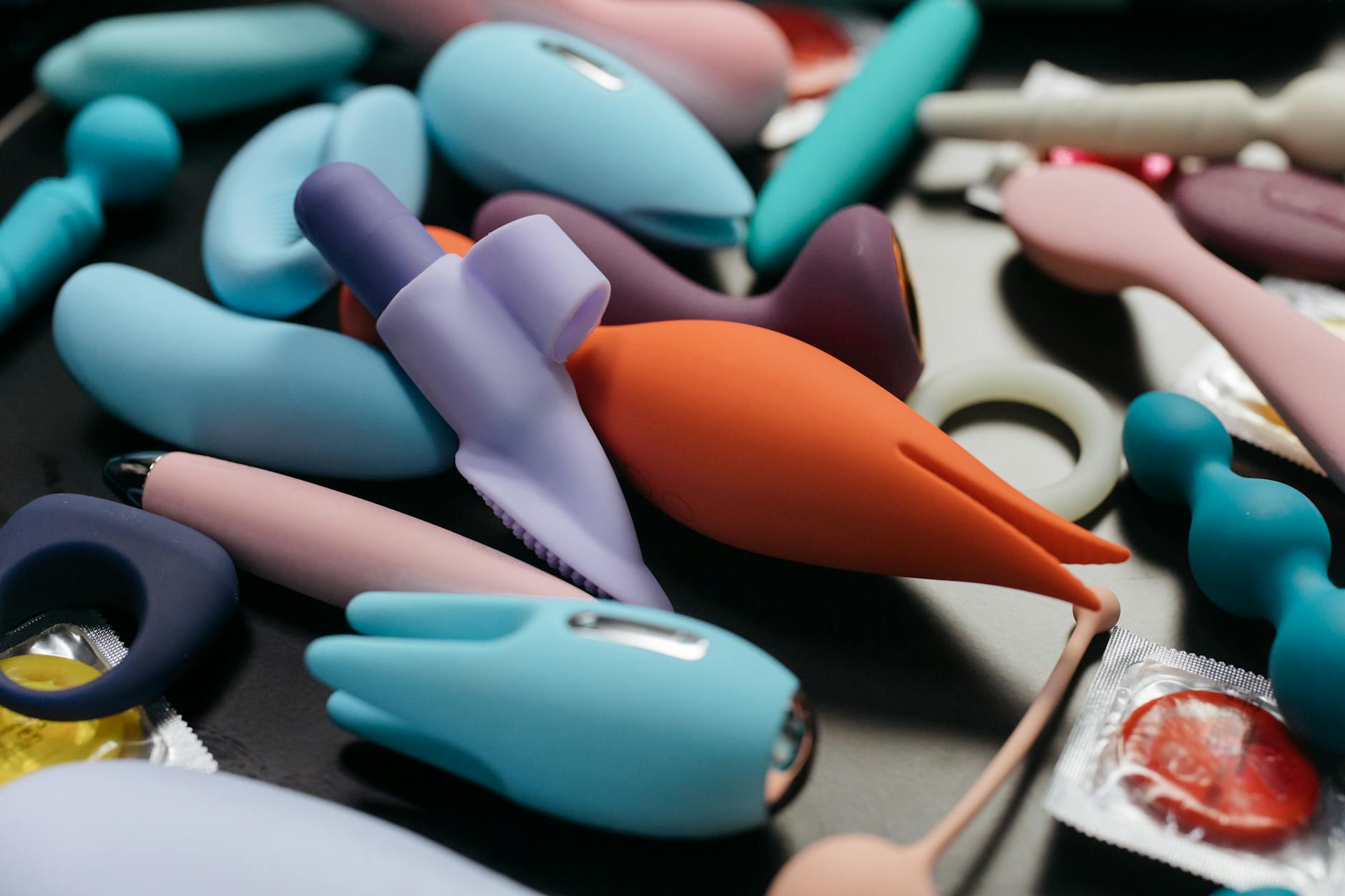
Let's start with the thing nobody tells you
Antidepressants save lives. They also change orgasm. Not in a metaphorical way. In a literal, neurochemical, "this doesn't feel like it used to" way. And that shift matters enough to talk about honestly, because a lot of people stop their medication thinking the problem is the drug, when really the problem is that nobody explained what was happening.
Here's what I see in my practice: someone starts an SSRI or another mood stabilizer, feels better mentally, then notices their body feels different during sex. Arousal takes longer. Orgasm feels distant or muted. Sometimes it disappears entirely. The panic that sets in is real, and it's often followed by a choice that derails both their mental health and their sex life: they quit the medication to get their pleasure back.
There's a third option. Understanding the mechanism. Adjusting your approach. And often, finding that lemon vibrators work differently now, and sometimes better.
How antidepressants actually change arousal and orgasm
Most antidepressants work by raising serotonin levels in your brain. That's good for mood stability. But serotonin also plays a role in sexual response, particularly in the neurochemical cascade that leads to orgasm. When your serotonin goes up, the brake system in your nervous system gets stronger. It's like your brain is working to prevent overstimulation. That protective mechanism is valuable for managing depression or anxiety. It's also the reason sensation can feel muffled.
Here's what happens in the body:
SSRIs (selective serotonin reuptake inhibitors) like sertraline, paroxetine, and fluoxetine delay or prevent orgasm in about 40 percent of users. It's not that desire disappears. It's that the signal between your clitoris and your brain gets quieter. Arousal builds, but it plateaus. You can spend 20 minutes of stimulation and feel like you're at the same intensity as minute five. Some people describe it as being behind a pane of glass.
Other medications like bupropion actually have the opposite effect, sometimes increasing sensation. SNRIs (serotonin-norepinephrine reuptake inhibitors) fall somewhere in the middle. The point is: not all mood meds affect sexual response equally, and some don't affect it at all.
Why sensation feels different even when desire doesn't
This is the confusing part for a lot of couples. One partner will say, "I don't want you any less. I want sex just as much. But my body isn't cooperating." That's true, and it's maddening, because it means the problem isn't emotional. It's biochemical.
There are a few layers:
First, the nervous system pathway that carries sensation from your clitoris to your brain gets dampened. Your clitoris is still there. The nerve endings haven't gone anywhere. But the signal is quieter. Imagine turning down the volume on a song you love. The song is still beautiful. You just can't hear it as clearly.
Second, the arousal phase stretches. Without medication, arousal might build in 5 to 10 minutes of clitoral stimulation. On SSRIs, that same stimulation might take 20 to 30 minutes to create the same response. That's not a failure. That's a different timeline.
Third, dopamine involvement drops. Dopamine is the reward chemical that makes orgasm feel like a goal worth reaching. Less dopamine means less urgency, less anticipation. Pleasure is still possible. It just requires a different approach.
Why lemon vibrators often work when other toys don't
This is where it gets practical. Lemon vibrators use air-suction technology rather than traditional vibration. That matters because sensation thresholds change on antidepressants.
With standard vibration, you're depending on the same neural pathway that antidepressants dampen. You turn up the intensity, but you're working against a muted signal. It's exhausting.
With air-suction, you're working with the body's geometry instead of against it. The suction stimulates a broader area of nerve endings at once, which creates a different quality of sensation. Some people find that because the signal is coming from more nerve tissue simultaneously, it bypasses some of the dampening effect. You're flooding the channel with input rather than trying to turn up the volume on a single, quiet frequency.
I've watched people who couldn't reach orgasm on antidepressants suddenly do so with a lemon vibrator within weeks. Not because lemon vibrators are magic. Because the mechanism matches what their nervous system actually needs right now.
The timeline adjustment that actually works
If you're on an antidepressant and your pleasure has shifted, here's what I recommend:
First, don't panic. Don't quit your medication. Talk to your prescriber about the side effect. Some doctors will adjust your dose. Others might suggest you take a low dose of an additional medication to counteract the sexual side effect. Some will suggest switching to a different antidepressant with a lower sexual side effect profile. All of those options exist and are worth discussing.
Second, expect that your arousal timeline has changed. That's not laziness or low libido. That's neurobiology. Plan for longer foreplay. Build in 20 to 40 minutes instead of 10. This isn't punishment. It's actually an opportunity. Longer foreplay often leads to more intense orgasms, which a lot of people discover only after their timeline changed.
Third, try lemon vibrators. The air-suction mechanism often works better than traditional vibration for people on SSRIs. Start with lower intensity settings and work up. Give it time. Some people feel a difference in one session. Others need a few days of use before their body's responsiveness adjusts.
Fourth, explore sensation beyond orgasm. This is crucial. If you're entirely focused on reaching orgasm as proof that you're "back to normal," you'll miss the pleasure that's actually available. Pleasure without orgasm is still pleasure. Touch that feels good is still valuable. Shifting that goal can paradoxically make orgasm more likely because you remove the pressure.
What partners need to know
If you're in a relationship and your partner is on antidepressants, the conversation matters. They haven't lost attraction. Their body is processing sensation differently. That's it. You're not the problem. The medication isn't a failure. They're just experiencing a different timeline.
Using lemon vibrators together can actually be a moment of reconnection because it reframes the experience from "something is wrong" to "we're figuring out what works now." It removes the pressure for them to respond the way they used to. It becomes collaborative.
Your medication is working. Your pleasure shifted. That's information, not a life sentence.
When to talk to your doctor
Sexual side effects from antidepressants are common, documented, and worth addressing with your prescriber. Bring it up. They've heard this before. The options are real: dose adjustment, medication switching, timing changes (taking your dose after sex rather than before), or adding something to counteract the effect. Don't suffer in silence and don't assume you have to choose between mental health and sexual function. You don't.
If you've been on the same medication for six months and the side effect hasn't improved, that's worth revisiting. Sometimes the body adjusts over time. Sometimes it doesn't. Either way, your doctor should know.
FAQ
Can I use a lemon vibrator while taking antidepressants?
Yes, absolutely. Lemon clitoral vibrators are safe to use alongside any antidepressant. In fact, because of how air-suction technology works, many people find lemon vibrators actually help counteract SSRI-related numbness. Start at lower intensity and build up as your body adjusts.
How long does it take for sensation to come back after starting antidepressants?
It varies. Some people notice changes within days. For others, it takes weeks or months for the body to reach a new baseline. And for some, the shift in sensation doesn't fully reverse, which is why adjusting your approach (like trying different types of stimulation) matters more than waiting for things to go back to how they were.
Do all SSRIs cause the same sexual side effects?
No. Sertraline, paroxetine, and fluoxetine are often reported to have the most noticeable sexual side effects. Sertraline is associated with fewer than some others, but individual responses vary wildly. Bupropion and some SNRIs tend to have fewer sexual side effects. Your doctor can discuss which medication might be better for you.
If a lemon vibrator works, does that mean my antidepressant is working less well?
No. Using a lemon vibrator doesn't mean the medication is failing. It means you've found a tool that works with your current neurochemistry. Your antidepressant is still stabilizing your mood. You're just using different equipment to access pleasure.
Should I take my antidepressant at a different time to help with sexual side effects?
Some people find taking it after sex rather than before helps, because the medication's peak effect isn't coinciding with the moment they need the most sensation. Ask your doctor if timing changes are safe for your specific medication. Don't adjust on your own.
Is low sexual sensation on antidepressants permanent?
Not necessarily. For some people, the body adjusts after a few months. For others, the shift persists. If it does, that's when exploring what does work for you, whether that's lemon vibrators, longer foreplay, different positions, or even switching medications becomes important. Permanent doesn't mean unchangeable.
What comes next
Antidepressants and pleasure don't have to be at odds. They're separate systems, and while they intersect in your nervous system, understanding that intersection means you can work with it rather than against it. A lemon vibrator isn't a workaround. It's a tool that meets your body where it actually is right now. Your mental health matters. Your sexual pleasure matters. You don't choose between them.
If you're navigating this, you're not alone, and you're not broken. You're just recalibrating.