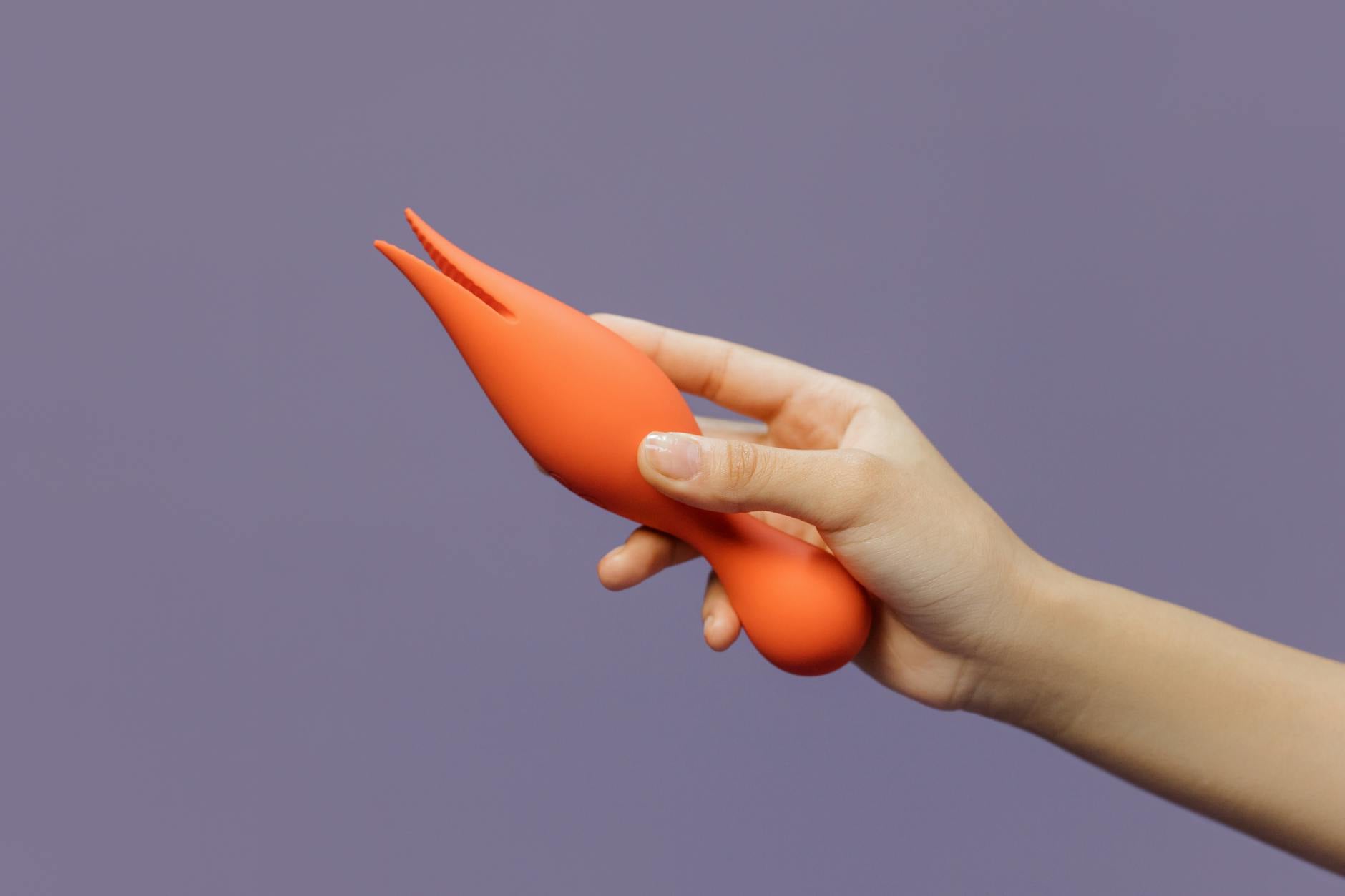
Let's be honest about solo exploration
The first time you explore pleasure entirely on your own terms, without performing for someone else, something shifts. Your nervous system relaxes. Your brain stops narrating what's "supposed" to happen. You're not managing someone else's arousal, timing, or ego. You're just... present.
That's when lemon vibrators, and lemon clitoral vibrators specifically, become something totally different. They're not a substitute for a partner. They're a conversation with your own body.
Why solo exploration feels foreign at first
Most of us grow up learning that pleasure is relational. You're supposed to want it because someone else wants you. You're supposed to time it around their arousal, their schedule, their preferences. By the time you get alone, your body's already learned to perform rather than explore.
When you flip that script and make pleasure about your own sensations, your own timeline, your own curiosity, your nervous system doesn't quite know what to do. That's normal. It's not broken. It's just unfamiliar.
Here's the thing: your clitoris doesn't care about any of that context. It responds to sensation. But your brain does care. Your brain is the biggest sex organ you have, and it's been trained to treat pleasure as something you do for someone else.
Solo exploration rewires that. It teaches your brain and body that pleasure is valid for its own sake.
What lemon vibrators reveal that partnered sex doesn't
When you're alone with a lemon clitoral vibrator, a few things become clear:
First, you learn your own rhythm. With a partner, you're constantly adjusting. Slowing down if they're overwhelmed. Speeding up if they're getting impatient. Solo, you can spend twenty minutes at pattern two on the Lem, then move to pattern five, then back to two. You discover what actually feels good versus what you thought should feel good.
Second, you notice what intensity works for you. Many people discover solo that they like less pressure than they thought. Or more. The lemon vibrator's suction design means you're not getting direct friction, which is why people often find they can explore longer without numbness or irritation. That's valuable information about your own body.
Third, you get to find out what gets you off without anyone else's preferences in the mix. Maybe you love a specific pattern. Maybe you like to use it on different spots. Maybe you like building slowly or jumping straight to high intensity. All of that is real data about your body. It's yours.
Photo by cottonbro studio on Pexels
Why the sensations feel different when you're alone
There's actual neuroscience here. When you're alone and fully present, your parasympathetic nervous system (the part that says "it's safe to relax and feel") has a chance to activate. There's no part of your brain monitoring the door. There's no muscle tension from managing someone else's experience.
With that baseline calm, sensation travels differently. The same lemon clitoral vibrator feels more intense because you're actually noticing it instead of partially dissociated and managing. Orgasms often feel different too. Not necessarily better or worse, but clearer. More localized. More... yours.
Some people describe solo pleasure as quieter. Less theatrical. The pleasure isn't for an audience. It's just sensation and response, without the narrative you normally wrap around it.
The practical stuff that matters when you're new to this
If you're exploring solo pleasure for the first time with a lemon vibrator, a few things help:
Give yourself actual time. Don't try to rush through it in ten minutes between work and dinner. Block out thirty minutes where you're not waiting for someone to come home or feeling guilty about the laundry. Your body will relax faster when you're not in time-crunch mode.
Start with lower intensity. The Lem has multiple settings, and most people who are new to their own arousal find that starting at pattern one or two and building feels better than jumping straight to five. You're learning what sensation feels like in your own body. Slow is the way to find that.
Notice what you're thinking about. Are you fantasizing? Are you thinking about your body? Are you just following sensation? None of those is wrong, but noticing the pattern tells you something about what turns your brain on.
Try different spots. Some people find they prefer pressure on the clitoral hood rather than direct contact. The suction-based design of lemon vibrators works differently than traditional vibration, which means you might be comfortable with longer sessions and different angles than you'd expect.
The mental piece nobody talks about
Solo exploration can stir up some unexpected feelings. Guilt, because you were taught that pleasure is something you earn through being attractive to someone else, not something you just take. Weirdness, because your body is responding in ways you've never noticed when another person was involved. Even grief, sometimes, if you realize you've been managing your own pleasure around someone else's needs for years.
That's all normal. Understanding your pleasure cycle means understanding what interferes with it. Sometimes what interferes is external stuff. Sometimes it's internal, like belief systems you didn't know you were carrying.
If you find yourself feeling resistant or numb, give yourself grace. You're learning something your body may not have been allowed to learn before. That takes time.
What changes once you know your own body
Here's the wild part: once you've spent time exploring solo, partnered sex often improves. Not because you're "better" at it, but because you actually know what feels good to you. You can ask for it. You can guide your partner. You can say "no, higher" or "slower" or "stay there" with confidence instead of approximation.
You also stop waiting for someone else to turn you on. You learn that you can generate your own arousal. That you can be the one driving the experience. That's empowering in a way that changes how you show up in partnered situations.
Solo exploration with a lemon vibrator isn't practice for partnered sex. It's not a warm-up. It's the main event. It's you discovering what your body is actually capable of feeling when there's no one else in the room.
FAQ: What People Actually Ask About Solo Exploration and Lemon Vibrators
Is it normal to feel weird about exploring pleasure alone?
Completely normal. We're socialized to think of sex as relational, which means solo pleasure can feel selfish or strange at first. It's not. It's knowledge. You're learning something essential about your own body. The weirdness usually passes after two or three times, once your brain catches up to the idea that this is allowed.
How long should a solo session actually take?
As long as you want. Some people take five minutes. Some take forty. If you're new to this, give yourself at least fifteen to twenty so your nervous system has time to settle and your body has time to respond. Rushing turns it into a task rather than an exploration.
What if I can't seem to orgasm when I'm alone?
Orgasm isn't the goal of solo exploration, though it's nice when it happens. Sometimes the body takes a few sessions to relax enough. Sometimes people find they don't orgasm but they discover sensation they love anyway. Sometimes it takes a specific combination of factors (time of cycle, stress level, mental focus) that you'll figure out over time. How to use lemon clitoral vibrators when you feel disconnected from pleasure covers this more directly.
Does masturbation change your sexual desire in partnered situations?
Not in the way people worry about. Some research suggests regular solo pleasure actually increases sexual desire overall. You're not "using it up." You're priming your nervous system to recognize arousal when it happens. The feedback loop runs the opposite direction: more awareness of pleasure solo often means more availability for pleasure partnered.
How do I know which lemon vibrator is right for solo exploration?
The standard lemon clitoral vibrator (the Lem) is designed for external clitoral stimulation. It's intuitive to use, the suction-based pattern feels different from traditional vibration, and it's powerful enough that you can explore sensation across multiple settings. If you're brand new to vibrators, it's a solid choice. If you prefer something smaller or less intense to start, the Berri is worth considering.
What if my body feels numb or unresponsive at first?
Give it time and patience. Numbness often comes from performance anxiety, even when you're alone. Your nervous system is still in that "do it right" mindset. It also comes from going straight to high intensity, which overstimulates and then desensitizes. Start low, go slow, and notice what feelings emerge as you relax. If numbness persists, check whether stress, hormones, or medication might be involved.
The real reason solo exploration matters
You deserve to know your own body. Not because it makes you better in bed with someone else. Because you live in your own body every single day. You deserve to understand what brings it pleasure, what makes it feel safe, what sensations it craves.
Solo exploration with a lemon vibrator is permission. Permission to be curious. Permission to take time just for sensation. Permission to learn what your body is actually like when there's no one watching and nothing to prove.
That knowledge is the foundation for everything else. For asking for what you want. For feeling entitled to pleasure. For understanding that your body's responses are valid and worth investigating.
Start wherever you are. Spend as much time as you want. Let your body teach you what it needs. That's solo exploration.