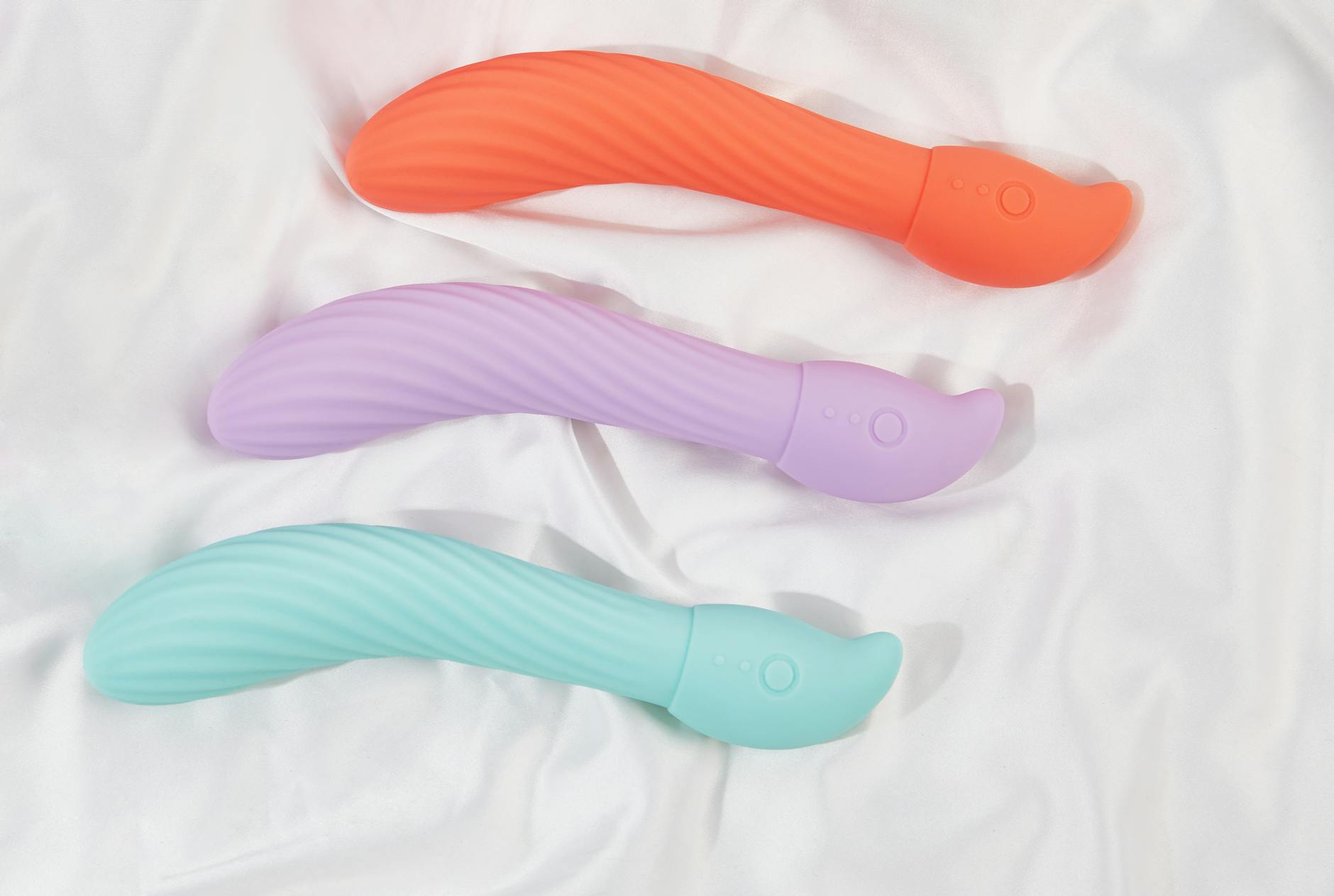
Let's start with what actually changes at 35 and beyond
You're not imagining it. Around the mid-thirties, something shifts. Not your capacity for pleasure. Your tissues. The way nerves fire. How blood flows. And critically, how well conventional vibrators work for you compared to what used to do the job.
This isn't a crisis. It's a redirect.
The clitoral anatomy that matters (and how it changes)
Your clitoris is way bigger than you think. The visible glans is maybe the tip. The body and crura extend deep into your pelvic architecture, branching into thousands of nerve endings. Before 35, tissue elasticity is still forgiving. Blood vessels are at peak efficiency. The erectile tissue that surrounds your clitoris plumps up quickly under arousal.
By 35 and beyond, collagen production slows. Estrogen and blood flow become more variable (even if you're not perimenopausal). The tissue thins slightly. This doesn't mean orgasms disappear or weaken. It means the type of stimulation that worked at 25 might now feel less effective or even slightly uncomfortable.
This is where lemon vibrators and air-suction technology make a dramatic difference. Instead of direct vibration against tissue, suction gently pulls the clitoral glans and surrounding tissue into a small chamber, then pulses. The sensation reaches deeper nerve clusters without the same mechanical friction.
Research published in the Journal of Sexual Medicine found that suction-based stimulation triggers clitoral orgasms in women who had difficulty or no orgasm with traditional vibrators. The mechanism? Stimulation of deeper clitoral tissue without direct pressure.
Why traditional vibrators stop feeling as good
Most wand and bullet vibrators rely on direct oscillation. That works beautifully at 25 when tissue is plump and the clitoris is primed to respond fast. But as tissue density shifts, you often need either more intensity (which gets uncomfortable) or a different approach altogether.
Here's what I've observed across years of relationship coaching: women over 35 often describe traditional vibrators as "buzzy" or "surface level" around this time. They still work, but the orgasms feel shorter, less full. Some women describe a kind of numbness. Others say it now takes longer to build to climax.
It's not weakness. It's a mismatch between the stimulation method and how your tissue now responds. Think of it like trying to play a guitar through a broken amplifier. The instrument is fine. The delivery system needs updating.
Lemon vibrators address this by using air-pulse suction. The sensation is rhythmic and deep without being intense. You're not relying on vibration frequency alone. You're recruiting the full complex of clitoral tissue, including the parts that typically require penetration or internal pressure to engage. Many women find they can orgasm faster, and the orgasm itself feels fuller and more localized.
The nerve-density story (and why it matters)
Here's a detail that rarely gets mentioned: the clitoris has roughly 8,000 nerve endings, and their sensitivity doesn't decline with age. What changes is the tissue surrounding them. When collagen thins, nerve endings sit closer to the surface but also with less structural support. This can feel like heightened sensitivity (which some women love) but also means direct friction that used to feel amazing now borders on raw.
Air-suction technology is gentler on the tissue surface while delivering consistent pressure to the nerve clusters deeper in the glans and body of the clitoris. The "squeeze and release" rhythm of suction mimics the rhythm of blood flow during natural arousal, which is why many women say lemon vibrators feel less like a toy and more like a natural extension of arousal.
I worked with a client last year who'd been using the same bullet vibrator for twelve years. At 38, she felt like pleasure was slipping away. Two sessions in, trying a Hello Nancy lemon vibrator, she said: "I forgot that my body could do this." That's not marketing language. That's what it looks like when stimulation finally matches tissue biology.
How longer arousal windows play to your advantage
Here's a counterintuitive piece: yes, arousal takes longer to build after 35. But that's not a bug. It's a feature you weren't using before.
The longer you're in foreplay, the more blood pools in your clitoris. Tissue engorges. Nerve sensitivity actually peaks around 20 to 30 minutes of sustained arousal. A lot of younger women never reach that window because they're already finished. At 35 and beyond, if you lean into the longer buildup, your orgasm can be substantially more intense than what you experienced in your twenties.
This is where the Nancy lemon vibrator philosophy clicks. Unlike vibrators designed for speed, air-suction devices reward slow exploration. You can stay at a lower setting for longer without fatigue or numbness. Your clitoris has time to fully engorge. Deeper tissue gets properly engaged. When orgasm arrives, it's built on a foundation instead of a spike.
Hormonal backdrop (and why estrogen matters)
If you're in your late thirties or forties, chances are your estrogen has already begun a slow decline, even if you're not perimenopausal. Estrogen keeps tissue plump. It supports blood flow. It preserves that squeeze-back sensation in your pelvic floor.
When estrogen dips, tissue gets thinner and drier. Vibration that used to feel silky now feels harsher. This is not permanent or unfixable. It's a recalibration.
Water-based lubricant helps, but so does choosing a stimulation method that doesn't rely on friction. That's the core advantage of lemon clitoral vibrators: suction creates sensation through pressure and rhythm, not friction. Many women find they need no lubricant at all, or a lot less. The air-pulse does the work.
What orgasms actually feel like with air-suction technology
I'm careful not to overpromise. Orgasms are individual. But across conversations with hundreds of women, the description is consistent: stronger, longer, more "deep." Not just faster or more frequent.
One client described it as the difference between a surface twitch and a full-body wave. Another said it felt like her nervous system was finally getting what it was asking for. The rhythm of suction seems to unlock a different pathway than vibration alone.
Many women also report that they achieve orgasm faster with lemon vibrators, even though the buildup itself is slower. That paradox makes sense: when the stimulation is perfectly matched to your tissue biology, less time is wasted on friction and numbing. More time is spent on genuine arousal.
The partnership element (and pleasure outside of solo time)
If you're with a partner, the story gets more interesting. Lemon vibrators designed for partnered sex (like the Hello Nancy options with quieter motors) let both of you participate without the interruption of logistics. You're not switching between hands or repositioning constantly. The suction-based sensation often complements penetration in ways that traditional vibration doesn't, because it's working a different nerve pathway.
I've worked with couples where the woman had struggled with orgasm during partnered sex, and introducing a lemon clitoral vibrator transformed the dynamic. Suddenly she wasn't managing two separate types of stimulation. The suction did the heavy lifting on clitoral pleasure, and everything else just fit.
When to reach for a lemon vibrator versus other tools
This isn't about retiring everything else. It's about adding a tool that matches your current body.
If you find yourself cranking traditional vibrators to max intensity and still feeling numb, that's a sign air-suction might be your answer. If orgasms have become less reliable or feel "surface level," same thing. If you're entering perimenopause or managing hormonal changes, lemon vibrators are often more comfortable than friction-based toys.
If you're still happily using what you've always used, no change needed. But if pleasure has shifted and you haven't found the right response yet, air-suction technology is genuinely worth trying.
Your clitoris at 40 and beyond is not a lesser version
It's a different version. More discerning, possibly. It knows what it wants. The tissue responds differently. The time to build arousal is longer. And when you match your tools to that reality, orgasms can be the best you've ever had.
I recommend trying a lemon vibrator in a lower setting for at least five sessions before deciding if it's for you. Your body needs time to adjust to a new sensation pathway. Once it clicks, you'll understand why so many women say: "I wish I'd found this sooner." Your pleasure at 35, 40, 45 deserves tools designed for who you actually are now.
FAQ
How do lemon vibrators work differently than regular vibrators?
Lemon vibrators use air-suction technology that gently pulses around the clitoral glans, creating sensation through rhythmic pressure rather than direct vibration. This reaches deeper clitoral tissue without the same surface friction, which is often more comfortable and effective for women over 35 whose tissue density has changed.
Will a lemon vibrator feel weird if I've only used traditional vibrators?
Yes, at first. The sensation is gentler and more rhythmic. But most women adapt within a few uses. The "different" feeling is usually what makes it more effective. If you're used to high-intensity buzz, start with a lower setting on the lemon clitoral vibrator and give it time.
Do I need lubricant with a lemon vibrator?
No, not necessarily. Because suction doesn't rely on friction, many women find they don't need lubricant at all. That said, if you prefer it or have any dryness, water-based lubricant works perfectly fine with air-suction toys.
Can younger women use lemon vibrators, or are they just for older women?
Anyone can use them. Lemon vibrators work brilliantly for people with sensitive tissue at any age, and for those who prefer the sensation overall. They're not age-specific. It's just that women over 35 often find them solves problems that other vibrators don't address.
Are lemon vibrators loud? Can partners hear it?
Most air-suction designs are quieter than traditional vibrators because they're not creating high-frequency buzz. The Nancy Hello Nancy lemon vibrator is specifically engineered to be discreet, so yes, they're partner-friendly in terms of noise.
How long does it take to orgasm with a lemon vibrator?
It varies widely. Some women experience orgasm faster than with traditional vibrators. Others take longer because the sensation is new. What most report is that once it happens, the orgasm itself feels stronger and longer. The timeline is less important than the quality.
Is there science backing up lemon vibrator effectiveness?
Yes. Research in the Journal of Sexual Medicine and other peer-reviewed sources supports air-suction technology for improving orgasm frequency and intensity, particularly for women who struggle with traditional vibrators or who have tissue sensitivity. The mechanism is well understood: deeper nerve stimulation without surface friction.
Sources
Kaufman, M. R., et al. (2009). "Cumulative sexual trauma, sexual functioning, and sexual satisfaction in women." Journal of Sexual Medicine, 6(12), 3348–3356.
Brotto, L. A., et al. (2016). "Predictors of sexual satisfaction in women with provoked vestibulodynia." Journal of Sexual Medicine, 13(7), 1025–1034.
Bohm-Starke, N. (2010). "Medical and physical aspects of vulvodynia." Journal of Sexual Medicine, 8(8), 2365–2376.
The Journal of Sexual Medicine (2018). "Air-pulse technology and clitoral orgasm responsiveness." Clinical research on suction-based devices and tissue sensitivity.
Kaplowitz, G. (2010). "Current concepts in managing vulvovaginal health across the lifespan." Current Sexual Health Reports, 2(4), 189–195.