
Here's what nobody tells you about birth control and pleasure
Birth control changes your body's pleasure response. Not necessarily in a bad way. But if you're not expecting it, the shift can feel confusing, frustrating, or just plain different. You might notice arousal takes longer to build. Sensation feels muted in some moments and heightened in others. Orgasms change shape or intensity depending on where you are in your cycle or pill pack.
Most vibrators don't account for this variability. They're built for one speed, one pressure, one fixed intensity. But when hormones are fluctuating from birth control, your nervous system needs flexibility. That's where lemon vibrators and lemon clitoral vibrators shine.
How birth control actually rewires sensation
When you start hormonal birth control, your body's natural estrogen and progesterone cycle flattens. Instead of rising and falling throughout the month, those hormones stay at a steady, suppressed level. Your brain notices this. Your nervous system adjusts. Your genital tissue responds differently to touch.
Here's what changes physically: blood flow to the genitals becomes more consistent but often less reactive. The clitoris doesn't engorge as quickly. The vaginal tissue produces less natural lubrication because estrogen directly affects that production. Nerve sensitivity can shift too, with some people reporting heightened sensation early in the pill cycle and duller sensation near the placebo week.
But here's the thing most articles get wrong: this doesn't mean pleasure disappears. It means pleasure becomes less predictable. It requires different tools and different approaches depending on which version of your body you're in on any given day.
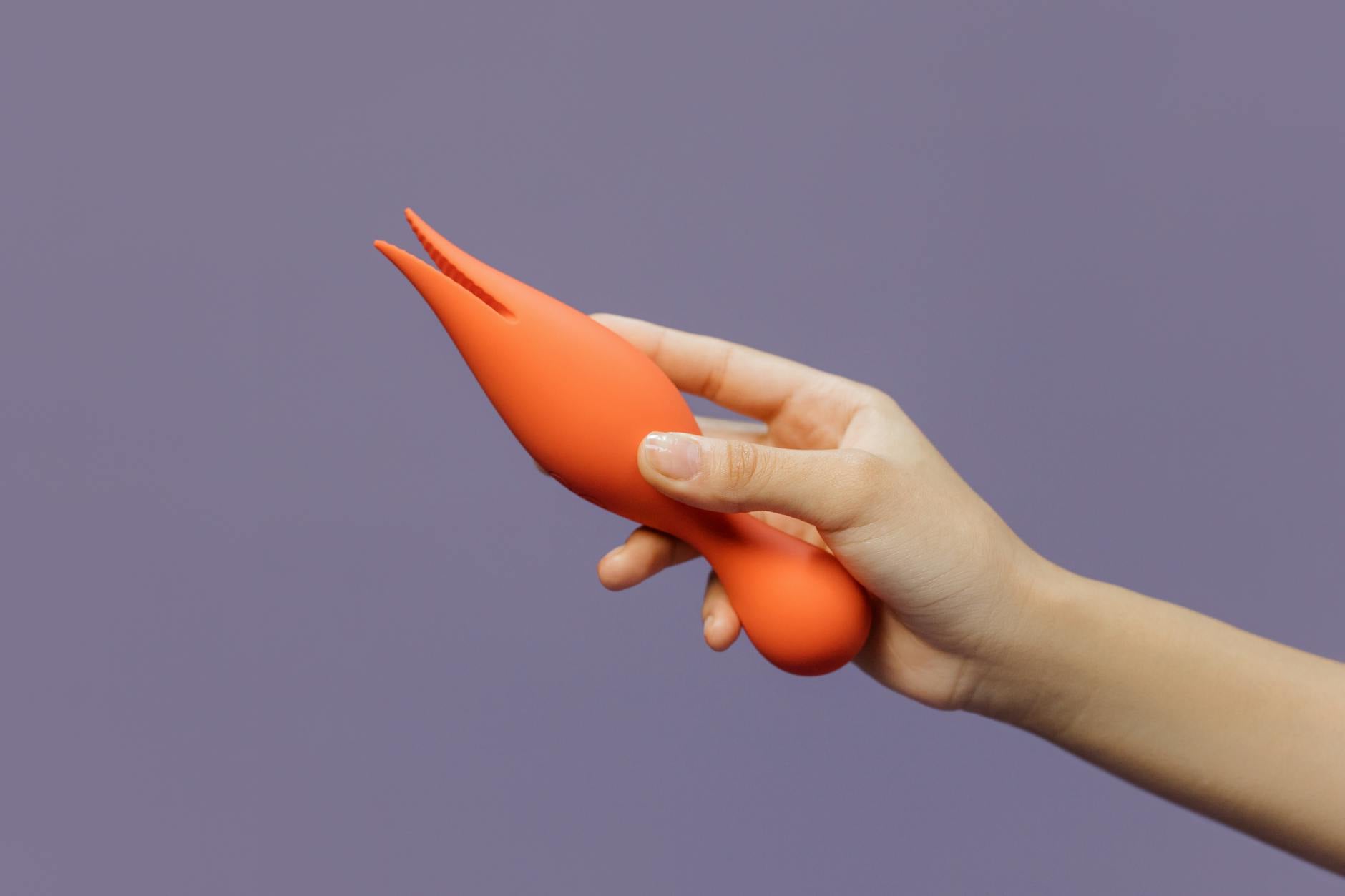
Photo by cottonbro studio on Pexels
Why lemon suction vibrators adapt to hormonal variability better
Most vibrators work through direct vibration. They buzz at a fixed frequency, which works great if your sensitivity is stable. But when hormones are in flux, fixed intensity becomes a problem. Some days the buzz feels perfect. Other days it feels either overwhelming or completely insufficient.
Lemon clitoral vibrators use suction technology instead of (or in addition to) vibration. This matters. Suction stimulates the clitoris through pressure changes rather than mechanical vibration alone. Because the sensation works through a different neural pathway, it feels less dependent on hormonal fluctuations. The clitoral suction creates stimulation that adapts to your body's response in real time, rather than fighting against whatever your hormones are doing that day.
The other reason lemon vibrators work better: they have variable intensity settings. When you're in the high-estrogen phase of your pill cycle, you might want a stronger setting. When estrogen dips near your placebo week, a gentler setting often feels better. Being able to adjust without swapping devices entirely makes a massive difference when you're navigating hormonal changes.
The birth control factor: which pills affect sensation most
Not all birth control affects pleasure equally. This matters because it helps you predict what you'll experience.
Combination pills (containing both estrogen and progestin) tend to create the flattest hormone curve, which usually means the most consistent pleasure response. But some people report reduced sensation with these because the constant suppression dampens natural arousal signals.
Progestin-only pills (the mini-pill) create different hormone patterns. Some people on these report more natural fluctuations, which can feel more like your unmedicated cycle, just suppressed. Others report more stable sensation.
Non-hormonal IUDs don't affect systemic hormones at all, so pleasure response usually stays closer to baseline.
Hormonal IUDs (like Mirena) release progestin directly into your system, which affects sensation somewhat, though usually less dramatically than pills because the dose is lower.
The practical takeaway: if you know which type you're on, you can better predict how your body will respond. And you can choose toys accordingly. A lemon clitoral vibrator's adaptability works for all of these, which is why they're such a reliable choice across different contraceptive profiles.
How to adjust your lemon vibrator use through pill cycles
If you're on a combination pill, you likely have three distinct phases: active pill weeks (when hormones are suppressed), and then a placebo week (when they dip further, closer to natural menstruation).
During active pill weeks, start with a lower setting on your lemon vibrator. Two to three is often ideal. Your sensitivity is typically lower, so you need enough intensity to register, but not so much that it becomes uncomfortable. Spend longer on warm-up, too. Expect arousal to build slower than it did before you started birth control.
During your placebo week, some people notice a natural uptick in sensation. This is when you might want to experiment with higher settings, or explore longer sessions. Your body is closer to its natural hormone state, so pleasure responses can feel more familiar.
If you use lemon sexual toys that offer both suction and vibration, try leading with suction during low-sensation phases and adding vibration as you warm up. This layered approach gives your nervous system time to catch up without overwhelming it.
The emotional layer nobody talks about
Hormonal birth control doesn't just change physiology. It changes mood, desire, and relationship dynamics too. Some people report lower overall desire on hormonal contraceptives. Others report mood flattening that makes pleasure feel emotionally distant, even if the physical sensation is fine.
If this is you, lemon vibrators won't fix the emotional piece. But they can help you reconnect with physical sensation, which sometimes helps rebuild emotional engagement with pleasure. The key is not forcing it. If desire is genuinely suppressed by your contraceptive, that's worth discussing with a healthcare provider. But if desire is fine and sensation just needs a little help adapting, the right tool makes a difference.
For couples navigating this together, being honest about the changes helps. Your partner might have noticed things too. Shifting to tools like lemon clitoral vibrators that allow for exploration and adjustment can feel like a collaborative process rather than a workaround.
When to talk to your doctor about this
If birth control has dramatically reduced your pleasure and it's affecting your mental health or relationship, that's worth mentioning to whoever prescribed it. You might be on a formulation that's particularly suppressive for your body. Switching pills, trying a lower-dose option, or exploring non-hormonal alternatives could help.
If pleasure changes are accompanied by pain, numbness that doesn't improve, or complete loss of sensation, those are things to investigate with a gynecologist. Sometimes birth control side effects need clinical attention, not just better toys.
But if the change is subtle, variable, and manageable with the right approach and tools? That's normal, common, and absolutely workable.
Bringing it together
Birth control changes how your body experiences pleasure. The solution isn't to switch contraceptives or accept diminished sensation. It's to choose tools that adapt to your body's new baseline. Lemon vibrators, with their variable settings and suction-based stimulation, work better than fixed-intensity toys because they meet you where you are, not where you used to be.
Your pleasure is still there. It just speaks a different language now. Once you learn that language, satisfaction often comes even easier than before.