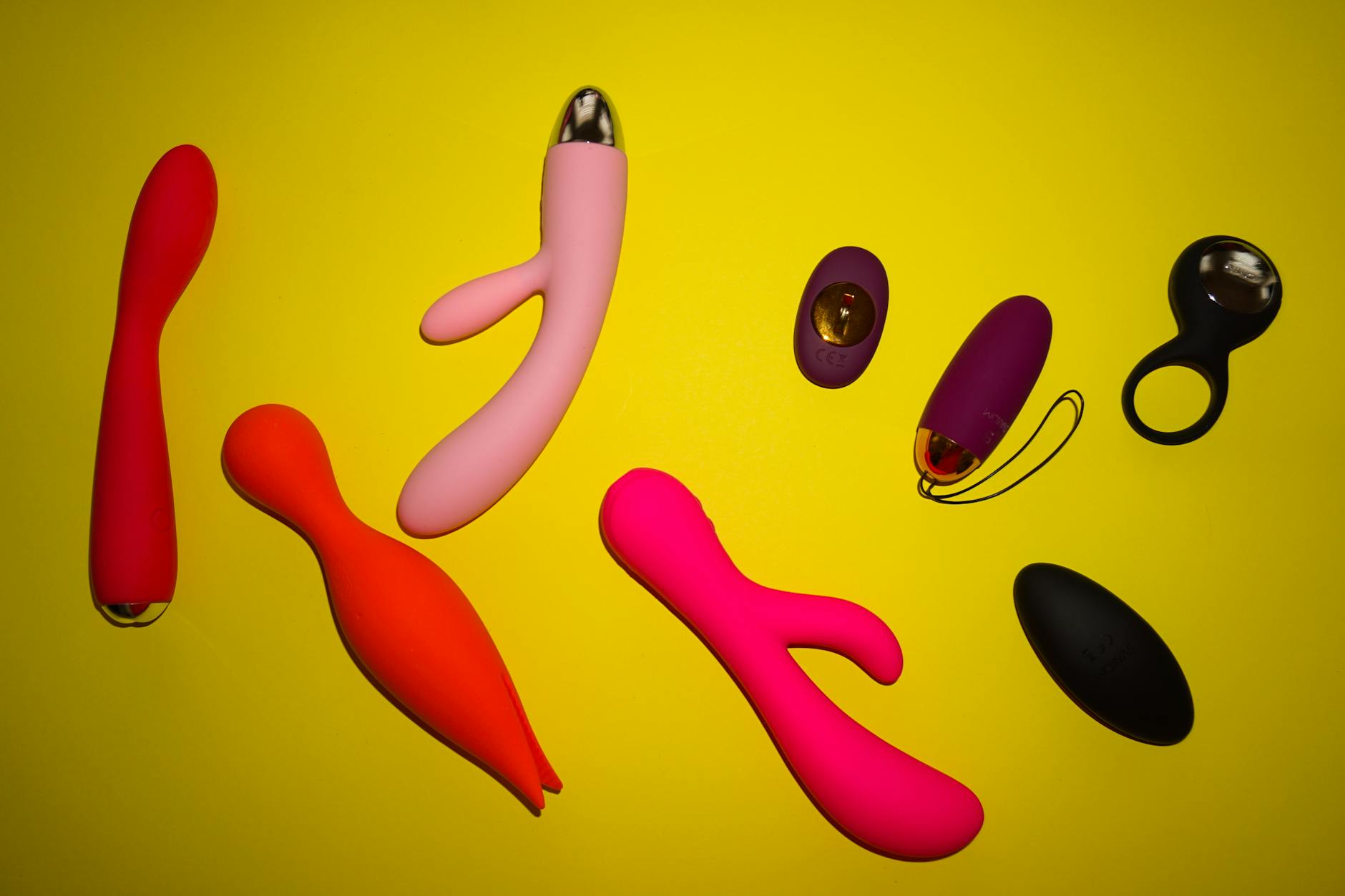
Here's the truth about clitoral sensitivity
Not everyone's clitoris responds the same way to vibration. For some people, a standard vibrator at full speed feels amazing. For others, it feels overwhelming, numb-making, or even painful. Neither response is wrong. Your sensitivity is just... your sensitivity.
The problem is that most vibrators on the market are designed with one assumption: stronger vibration equals better pleasure. That works for some bodies. For people with thin tissue, hormone-related sensitivity shifts, or naturally delicate nerve endings, it often backfires.
Why lemon vibrators feel different
Lemon clitoral vibrators like the Hello Nancy Lem use a completely different mechanism than traditional vibrators. Instead of rapid oscillation (which creates intense, focused friction), they use air-pulse or suction-based stimulation. This creates a gentler pressure wave that surrounds the clitoris rather than hammering at it directly.
Think of it this way: a standard vibrator is like continuous poking. A lemon vibrator is more like a soft, rhythmic squeeze. For sensitive tissue, that distinction is everything.
The Lem, for instance, works by drawing the clitoris gently into a soft silicone chamber and releasing at varying intensities. At lower settings, it feels almost meditative. You're not fighting friction or managing overwhelming sensation. You're just... receiving.
When clitoral sensitivity increases
Sensitivity changes for a bunch of reasons, and knowing which one applies to you helps you choose the right tool.
Hormonal shifts. Menstrual cycle changes, hormonal birth control, perimenopause, and menopause all alter clitoral blood flow and tissue thickness. During certain phases, your clitoris might be more swollen and sensitive. During others, it might feel numb. A lemon vibrator's adjustable intensity means you're not locked into one speed that worked last week but doesn't work today.
Age and tissue changes. After 40, collagen production slows and skin becomes thinner, including vulvar tissue. This isn't a problem. It's just a change that makes certain types of stimulation feel better. Suction-based clitoral vibrators are often the most comfortable choice during this transition.
Inflammation or recovery. Vulvodynia, dermatitis, or recovery from childbirth can make direct vibration feel raw. Lemon vibrators with their gentler pressure mechanism often feel soothing rather than aggravating.
High sensitivity as baseline. Some people are just naturally sensitive. Their clitoris has denser nerve endings, or their nervous system processes sensation more intensely. For them, even medium-speed traditional vibrators feel overwhelming. A lemon clitoral vibrator on pattern 1 or 2 might be the first thing that actually feels good rather than too much.
The physics of why suction works better for sensitive tissue
When you use a traditional vibrator directly on the clitoris, you're creating friction and localized micro-trauma. It's not painful in the moment, but over time or at high intensities, it can desensitize tissue or cause inflammation.
Air-pulse and suction stimulation work differently. They create a pressure gradient that stimulates the entire clitoral structure (yes, your clitoris extends internally, and suction stimulates more of it). This distributed stimulation means less intensity at any single point.
For sensitive clitorises, this is ideal. You get stronger overall sensation and deeper pleasure without the rawness.
The best lemon adult toys for sensitive tissue also let you control intensity independently of speed. With the Lem, you can choose a fast pattern at a gentle pressure level. With traditional vibrators, faster usually means harder. That inflexibility is the real problem.
How to use a lemon vibrator if you have a sensitive clitoris
Start at the lowest setting. Pattern 1 or 2 on a lemon vibrator is not a placeholder. It's often where the best sensation lives. Spend time here before moving up. You might never need higher settings.
Use plenty of water-based lubricant. This isn't just for comfort. Lube reduces friction between the toy and your skin and helps distribute pressure more evenly. For sensitive tissue, this matters.
Explore angle and positioning. Unlike a vibrator that needs direct contact, a lemon clitoral vibrator works well at different angles. Try it directly over your clitoris, slightly off to one side, or over your outer labia. You might find that a gentler angle with light pressure beats direct contact at any intensity.
Longer warm-up time. If your clitoris is sensitive, arousal takes longer. Budget 15-20 minutes of foreplay or self-touch before introducing your lemon vibrator. Your body needs time to swell and become ready.
Pay attention to your cycle. If you menstruate, notice which days feel best for which intensities. Many people find that lower settings work better mid-cycle when sensitivity peaks, and higher settings feel better during other phases. Track what works.
The lemon vibrator advantage for sensitive clitorises
Because lemon sexual toys use suction instead of vibration, they give you something traditional vibrators don't: the ability to feel pleasure without numbness or overwhelm.
Many people with sensitive clitorises report that they've never experienced consistent, full-body pleasure until they switched to a lemon clitoral vibrator. That's not because their sensitivity was a defect. It's because they were using the wrong tool.
The Lem and similar lemon adult toys are designed for this exact reason: to deliver pleasure to people whose bodies don't respond well to conventional vibration. If you've always felt like vibrators were "too much" or left you feeling numb, a lemon vibrator is worth trying.
FAQ: Lemon vibrators and sensitive tissue
Can I use a lemon vibrator during my period?
Absolutely. Many people find that suction-based stimulation during menstruation actually feels better than vibration, since the tissue is already more swollen and sensitive. Use a light pressure, take your time with warm-up, and listen to your body. If it feels uncomfortable, stop.
Will a lemon clitoral vibrator desensitize me over time?
Unlike high-speed vibrators, which can cause nerve fatigue with repeated use, lemon vibrators are gentler. That said, any stimulation can lead to temporary desensitization if you use it constantly without breaks. Vary your routine, take rest days, and if you notice numbness building, step back for a few days.
What's the difference between a lemon vibrator and other air-pulse toys?
Lemon-shaped clitoral vibrators like the Lem are specifically designed to cup the entire clitoral glans while delivering suction. Other air-pulse toys might focus on the clitoral hood or surrounding tissue. The design matters because it changes which nerves you're stimulating and how intense it feels. For sensitive tissue, the gentle cupping action of a true lemon design is often ideal.
Can I use a lemon vibrator with a partner?
Yes, and it can actually improve partnered pleasure for people with sensitive clitorises. Since you're not fighting numbness or overwhelm, you can stay present and connected. Many couples find that introducing a lemon vibrator takes pressure off penetration and lets everyone relax into the experience.
How do I know if I need lube with a lemon clitoral vibrator?
Start with lube and see how it feels. Some people find that a thin layer of water-based lube improves the sensation. Others prefer direct contact. With a lemon vibrator, you have more flexibility than with vibrators because the suction mechanism doesn't rely on friction. Experiment and trust what feels best.
Are lemon vibrators quieter than regular vibrators?
Yes, generally. Because they use air-pulse or suction instead of rapid vibration, they're quieter. This can matter if you live with roommates or a partner you want to surprise. The Lem, for example, is noticeably quieter than most wand or bullet vibrators.
What to try if you're new to lemon vibrators
If you've had bad experiences with vibrators in the past, or if you know your clitoris is sensitive, a lemon clitoral vibrator is worth the experiment. Start with the lowest intensity. Give yourself permission to go slowly. Your pleasure isn't supposed to feel like a battle.
Many people report that trying a lemon vibrator for the first time unlocks sensations they didn't know were possible. That's not magic. That's just the right tool for your body.
For more on adjusting your pleasure toolkit as your body changes, explore how to use a lemon vibrator during different life phases, or consider reading about why lemon vibrators feel better with longer foreplay and buildup for deeper insight into pacing and sensitivity.
If you're exploring toys with a partner, how to introduce lemon vibrators to your partner covers the conversation side of things.
Your clitoris deserves pleasure that feels good, not overwhelming. A lemon vibrator might be exactly what makes that possible.
Photo by Madison Inouye on Pexels